Express Highway of a beautiful life: Reevaluation Co-counselling
On hearing this name, it may be felt that this could be a complicated counselling technique. But it is not so. This is a very simple approach of behaviour that can be done and practised by all. It is not a complicated technique or method in psychology. It is thinking discovered, developed and adopted by common man. When it was written as an independent theory; then it was written as a new holistic theory without combining it with earlier theories. No psychological study is required to understand and practice this theory. Let's understand it in order to make our life glorious and beautiful.
This theory can be elaborated as follows. It has some postulates that man is by birth very intellectual, very cooperative, loving and efficient. In other words, he is full of positive qualities. If that one is human (of any type or features); then he/she is very nice. This thinking tells that despite of these congenital qualities, due to the impacts of socialization; our qualities are eclipsed and this eclipse takes places because of the unity of emotions and intellectual. If our emotions are struck, damaged; then our intellectual is also affected. In fact, when emotions are normal (balanced); then only intellectual works properly; as an angry person cannot even talk properly or read carefully.
Although we are by birth so capable and so enriched, we live in a poor condition. It is so because we acquire many types of emotional blockages and resistances due to situations (wrong type of socialization and social stereotyping). It hampers our intellectual and capacities and they cannot function properly. They can be said to repressed emotions. For example; sometimes we badly suffer from stress, we terribly long for something. But if we repress these emotions; just compile them without expression; they create huge pressure which badly hampers the intellectual. It is so because the relation between intellectual and emotions is like clutch and gear of a vehicle. Emotions are clutch and capacities are gear. Unless we properly apply the clutch, gear does not work properly and the vehicle cannot move.
Therefore this thinking tells that whichever emotions we have hidden and repressed at the back of our mind; should be brought to forth; they should be expressed and seen. Once this happens; their effect up to a large extent reduces and the recovery processes going on in our mind and body (For example, opening of mouth by yawning when more amount of oxygen is required, discharge of more sweat in hot environment in order to reduce body temperature etc) get strengthened and the rest of the balance can be obtained by the mind and the body without our knowing it.
But as we are victims of habits and social obligations; we oppose expression of our emotions. When someone is tired and due to tiring and lack of oxygen; he or she yawns; then we say that it is a lazy and uncivilized person. And by doing this; we actually oppose the recovery process i.e. the natural balancing act; which is so unfortunate. It happens so many times on several occasions. If a child is crying; we tell him to stop his crying. So his pains and emotions don't get expressed and they are dumped within his/her mind. If the child had cried; the pains and the feelings could be expressed so that they would be weakened and then the nature would normalize it. But we don't let it happen.
At least children are allowed to weep. But our dependency on habits and social norms do not permit the elders to cry and to express their feelings. It even stops expression of natural emotions and processes which creates disequilibrium and if amount of disequilibrium is more; our intellectual can be eclipsed. And we know that if the clutch is damaged; the gear cannot be changed. The emotional blockage disables the intellectual.
Therefore this thinking tells us to see our emotions; express them; acknowledge their existence and get free from them. We should listen to others' feelings and respect it. We should enhance our listening and understanding skills for that and help others to get free from their emotional blockages. When we will start living free from emotional blockages, pressures and biases, then we will realize our capacities. Therefore this thinking is called reevaluation cocounselling. When we remove eclipse of emotions over intellectual that is acquired during the journey of life, then we understand, realize and reevaluate our potentials. Reevaluation cocounselling is a way to do this. It means understanding about one's emotions, feelings, pains and expressing them and listening and understanding to those of others; respecting it and helping them to get free fro these blockages. It is said that emotions are like humans. When we express them, acknowledge their importance; then like humans; they are also satisfied and their pressure vanishes. Their pressure is removed and they cooperate with the intellectual.
Therefore; emotions- old, stark, unwanted, undesired, painful emotions- need to be understood; seen and expressed properly. It would help the natural recovery processes a lot and we will become peaceful. The intellectual blocked by them will get free and it can function well. This thinking in relation to emotions and intellectual is consistent and close to Vipassana.
More about this theory can be obtained through: http://www.rc.org/
As a theory; its essence is this much and it is necessary to adopt it. We can anytime and continuously adopt it. We can see and understand those emotions that are in our mind at the moment; we can say that these emotions are natural; they are not wrong; so we need not worry about them. In a similar way; we can help others to see that by listening and understanding them. By the practice of this, we can control our emotions which are violent, disastrous and extreme and can make them normal.
If you are interested to know about its course and want to do it through a class; you can contact for details: niranjanwelankar@gmail.com
Thanks a lot to you for reading it completely and a request that if you find this useful; please do not keep it only with yourself and share it with others.
Monday, July 19, 2010

Thursday, July 1, 2010
सुंदर जीवन का महामार्ग: Reevaluation Co-counselling अर्थात् पुनर्मूल्यांकन सह- समुपदेशन
सुंदर जीवन का महामार्ग: Reevaluation Co-counselling अर्थात् पुनर्मूल्यांकन सह- समुपदेशन
यह नाम सुनके लग सकता है कि यह कोई जटिल समुपदेशन प्रक्रिया अथवा टेकनिक है । पर ऐसा है नही । यह अत्यंत सरल एवम् प्रत्यक्ष रूप से सभी द्वारा करने योग्य अभ्यास तथा वर्तन का दृष्टीकोण है । यह किसी प्रकार की मानसशास्त्रीय या मानसिक विज्ञान की जटिल प्रणाली नही है । यह तो सामान्य जीवन में आम आदमी द्वारा ढुंढी गई, विकसित की गई और अपनायी गई सोंच है । और जब इसको एक थिअरी तरह लिखा गया; तब उसे पहले किसी सिद्धांत अथवा थिअरी से न जोडते हुए पूरी तरह नए सीरे से लिखा गया । इसलिए इसे जानने तथा अपनाने के लिए किसी भी मानसशास्त्रीय अभ्यास की आवश्यकता नही है । आईए, इसको समझ लेते है; जिससे हमारा जीवन कुछ इसी छवि की भाँति सुंदर हो सकता है ।

यह नाम सुनके लग सकता है कि यह कोई जटिल समुपदेशन प्रक्रिया अथवा टेकनिक है । पर ऐसा है नही । यह अत्यंत सरल एवम् प्रत्यक्ष रूप से सभी द्वारा करने योग्य अभ्यास तथा वर्तन का दृष्टीकोण है । यह किसी प्रकार की मानसशास्त्रीय या मानसिक विज्ञान की जटिल प्रणाली नही है । यह तो सामान्य जीवन में आम आदमी द्वारा ढुंढी गई, विकसित की गई और अपनायी गई सोंच है । और जब इसको एक थिअरी तरह लिखा गया; तब उसे पहले किसी सिद्धांत अथवा थिअरी से न जोडते हुए पूरी तरह नए सीरे से लिखा गया । इसलिए इसे जानने तथा अपनाने के लिए किसी भी मानसशास्त्रीय अभ्यास की आवश्यकता नही है । आईए, इसको समझ लेते है; जिससे हमारा जीवन कुछ इसी छवि की भाँति सुंदर हो सकता है ।

(लद्दाख में सिंधु नदी)
इस दृष्टीकोण को कुछ इस प्रकार बताया जा सकता है । इसके कुछ तत्त्व है की, मानव जन्मत: अत्यंत बुद्धिमान, अत्यंत सहकारिता करनेवाला, प्रेम करनेवाला तथा अत्यंत कार्यक्षम है । युं कहें कि उसमें सकारात्मकता ठूस ठूस के भरी हुई है । यदि वह मानव है, इन्सान है (चाहे कैसा भी हो); तो वह बहोत अच्छा है । यह सोंच बताती है कि जन्मत: इतने अच्छे होते हुए भी सामाजिकीकरण (सोशलायझेशन) की प्रक्रिया में हमारे इन गुणों पर एक तरह का अंधेरा सा छा जाता है । और यह अंधेरा इसलिए छा जाता है, क्यों कि बुद्धि तथा भावनाएं का गठजोड होता है । यदि हमारी भावनाएं क्षतिग्रस्त हो गई; तो बुद्धि भी ठीक से काम नही कर पाती । युं कहें कि भावनाए सामान्य- नैसर्गिक- अवस्था में है; तोही बुद्धी ठीक रूप से कार्यरत रहती है । जैसे गुस्सा किया व्यक्ति ठीक से बोल भी नही पाता या पढ नही सकता ।
जन्मत: इतने सक्षम, इतने समृद्ध होते हुए भी हम बुरी स्थिती से गुजरते है । यह इसलिए होता है, कि हममें परिस्थितीवश (गलत तरह के सामाजिकीकरण और सामाजिक संस्कारों से) कई भावनिक अवरोध- इमोशनल ब्लॉकेजेस उत्पन्न होते है । इससे हमारी बुद्धी एवम् क्षमताए अवरुद्ध हो जाती है और ठीक से काम नही कर पाती । इनको दबी हुई, व्यक्त न की गई भावनाए कह सकते है । जैसे कभी हम गहरे तनाव का अनुभव करते है, किसी चीज को बुरी तरह चाहते है । पर यदि हमने इन भावनाओं को दबा के रखा, उनको व्यक्त नही किया; तो उनका बोझ बनता है जिससे बुद्धि कुंठित होती है । क्यों कि बुद्धी एवम् भावनाओं का नाता गाडी के क्लच और गेअर जैसा है । भावनाएं क्लच है तो बुद्धि और क्षमताएं गेअर जैसी है । बिना क्लच का ठीक से प्रयोग किए गेअर काम नही करता और गाडी दौड नही सकती ।
इसलिए यह सोच बताती है, कि हमारी जितनी दबी हुई भावनाएं, तनाव है, उनको सामने लाना चाहिए, उन्हे व्यक्त करना चाहिए, देखना चाहिए । इतना होने पर काफी हद तक उनका प्रभाव घट जाता है और हमारे शरिर एवं मन में निसर्गत: जो रिकव्हरी प्रक्रियाए चल रही होती है (जैसे कि ऑक्सीजन की कमी होने पर मुंह खोल के जम्हाई लेना, अधिक उष्ण हवामान में शरिर को ठंडा रखने हेतु अधिक पसीने का बहना आदि); उनको सहायता मिलती है और आगे का काम शरिर एवम् मन अपने आप, हमें बिना पता चले कर सकता है ।
पर हम आदतों और मान्यताओं के शिकार होने के कारण भावनाओं की अभिव्यक्ती पर रोक लगा देते है । जब किसी इन्सान को थकान की वजस से और ऑक्सीजन की कमी की वजह से जम्हाई आती है; तो हम कहते है कि देखो कितना आलसी और असंस्कृत है । और ऐसा करने से वास्तविक और नैसर्गिक रिकव्हरी- पुनर्भरण की प्रक्रिया कोही रोक देते है जो कितनी दुर्भाग्यपूर्ण बात है । और ऐसा कई जगह पर कई बार होता है । यदि छोटा बच्चा रोता है तो उसे रोना बन्द करने के लिए कहते है । जिससे उसकी वेदना व्यक्तही नही होती और अंदर ही अंदर दब जाती है । यदि वह रोता है तो उसकी वेदना बाहर आ जाएगी, व्यक्त हो जाएगी और क्षीण हो जाएगी जिससे उसकी नैसर्गिक शक्ती उसको सरलता से ठीक कर देगी । पर हम ऐसा नही होने देते ।
बच्चों को हम कम से कम रोने की मोहलत है । लेकिन हमारी मान्यताओं और आदतों की ग़ुलामी बडे लोगों को रोने भी नही देती, अपनी भावनाएं व्यक्त करने नही देती । और जो नैसर्गिक भावनाएं है, नैसर्गिक प्रक्रियाएं है, उनको रोक देती है जिससे असंतुलन उत्पन्न होता है और इसी तरह के असंतुलन की मात्रा बढ जाने पर वो हमारी बुद्धी को ग्रहण लगाती है । और हम जानते है कि अगर क्लच खराब हो गया; तो गेअर बदल ही नही सकते । भावनाओं के अवरोध से बुद्धि अपाहिज होती है ।
इसलिए यह सोच बताती है कि हमें भावनाओं को मुक्त हो कर देखना चाहिए, उनके अस्तित्व को समझना चाहिए । दुसरों की भावनाओं का सम्मान करना चाहिए, सुनने और समझने की शक्ति बढा कर दुसरों को उनके भावनिक अवरोध से मुक्त होने में सहायता करनी चाहिए । जब हम भावनाओं के बोझ से या पूर्वग्रहों से अर्थात बायस से मुक्त होना आरम्भ करेंगे तो हमें खुद की क्षमताओं का एहसास होगा । इसिलिए इस सोच का नाम पुनर्मूल्यांकन है । जिंदगी के सफर में हमारी भावनाओं के बोझ से बुद्धी और क्षमताओं पर आए हुए ग्रहण को हटाने पर हम फिरसे अपनी क्षमताओं का आकलन कर सकते है; उनको जान सकते है । और यह करने का तरिका को-काउन्सिलिंग- सह समुपदेशन है । अर्थात खुद की भावनाएं, दर्द, समस्याओं को समझना, उनको व्यक्त करना और दुसरों को सुन कर, उनके कहने का आकलन एवम् सम्मान कर उनको उनके भावनिक बोझ से फ्री करना । कहते है कि भावनाएं भी इन्सानों की तरह होती है । उनको व्यक्त करने से, महत्त्व देने से जैसे इन्सान स्तुति सुन कर खुशी से भर जाता है, वैसे ही भावनाएं भी अपना अवरोध हटा कर सहयोग करती है ।
इसलिए चाहें कितनी पुरानी, तीव्र भावना हो; कितनी ही अप्रिय, अनचाही या वेदनादायी भावनाएं हो; उनको समझना चाहिए, देखना चाहिए और उचित रूप से व्यक्त करना चाहिए । इससे निसर्ग का संतुलन बनाने का काम काफी हद तक आसान हो जाएगा और हमें चैन की राहत मिल जाएगी । उस भावना के बोझ द्वारा कुंठित और रुकी हुई बुद्धी खुल जाएगी; आगे जा पाएगी । भावना और बुद्धी के संबंध में यह सोच विपश्यना के काफी करीब है, उससे सुसंगत है ।
इसके बारे मे अधिक जानकारी प्राप्त करनी हो तो संपर्क कर सकते है: http://www.rc.org/
वैसे यह थिअरी तो मुख्य रूप से इतनी ही है और इसको अपनाना आवश्यक है । और इसे हम सतत, किसी समय अपना सकते है । अभी जो भावनाएं हमारे मन में आ रही है, उनको देख सकते है, समझ सकते है, यह कह सकते है, की वो कोई गलत बात नही है, नैसर्गिक रूप से हमारे मन मे आ रही है, अत: उनसे परेशान होने की आवश्यकता नही है । इसी प्रकार देखने के लिए दुसरों को की सहायता उनको सुन कर, समझ कर कर सकते है । इसी प्रकार के अभ्यास और प्रॅक्टिस से हम जो भावनाएं हिंस्र/ राक्षसी रूप लेती है, उनको भी सामान्य कर सकते है ।
यदि इसको एक कोर्स द्वारा करने में रुचि हो तो क्लास के बारे में पूछने के लिए संपर्क कर सकते है: niranjanwelankar@gmail.com
पाठकों को पूरा पढने के लिए धन्यवाद और बिनती की यदि आपको यह बात अच्छी लगती है तो कृपया इसे अपने तकही सीमित न रखें !
Friday, June 4, 2010
कर्वे: "वे" ऑफ लाईफ:
माझ्या आयुष्यात "कर्वे" (म्हणजे कर्वेनगर, कर्वे स्त्री शिक्षणसंस्था, कर्वे समाजसेवा संस्था, कर्वे पुतळा आदि) संबंधित गोष्टींचं स्थान फार विशेष आहे. इतकं, की "कर्वे"मध्ये येण्याआधीचं जीवन आणि नंतरचं जीवन असे दोन भाग करावे लागतील! गेल्या सुमारे चार वर्षांपासून जीवनचा मार्ग ("वे" ऑफ लाईफ) कर्वे झाला आहे. अनेक प्रकारे.....
सर्वांत पहिला कर्वे फॅक्टर म्हणजे कर्वेनगर. इथे आगमन आणि इथल्या वास्तव्याला सुरुवात कर्वे स्त्री शिक्षण संस्थेपासून झाली. त्यानंतर समाज सेवेमध्ये पदव्युत्तर शिक्षणासाठी महर्षी कर्वे समाज सेवा संस्था. हा सर्वांत मोठा कर्वे फॅक्टर; जणू अनेक कर्वे उपग्रह असलेला कर्वे गुरू ग्रह! शिक्षण, ज्ञान, मित्र, मैत्रिणी, नोकरी (आत्तापर्यंतच्या सर्व जॉब मिळण्यामध्ये कर्वे व्यक्तींचा वाटा होता), आत्मविश्वास, स्पष्टता, जीवनदिशा आणि जीवनसाथी ह्या काही जीवनावश्यक गोष्टी! ह्या सर्व गोष्टी कर्वे समाजसेवा संस्थेने नेहमीसाठी दिल्या! एका व्यक्तीसाठी म्हणून कर्वे संस्थेची ही केवढी महत्ता! इतकं भरभरून कोणाला कुठून मिळत असेल? जीवनाचा एक अत्यंत एंजॉयेबल भाग कर्वेमध्ये व्यतित झाला. अनेक आठवणी, प्रसंग, क्षण, "मंतरलेले दिवस" . . . . अनेक गोष्टी पहिल्यांदाच झाल्या आणि होतच राहिल्या....
आजही ही प्रक्रिया पुढे सुरू आहेच. कर्वे पुतळ्याजवळील वास्तव्य आणि तिथलाच ड्रायव्हिंग क्लास! आणि आता परत पी.एच.डी प्रवेशासाठीचे केंद्र म्हणून कर्वे समाजसेवा संस्थाच मिळाली! जणू जीवनाचा केंद्रबिंदू "कर्वे" आहे. सर्व जीवन त्याभोवती विणले जात आहे. ....
"कर्वे"आधीही जीवन होतंच आणि नंतरही आहेच. पण कधीकधी अशा गोष्टी घडतात की "आधी" आणि "नंतर" असा फरक करावा लागतो. उदा., दुसर्या महायुद्धाआधीचे जग आणि त्यानंतरचे जग. त्याप्रमाणे "कर्वे"चं स्थान अद्वितीय आहे. एकाकी किंवा दिशाहिन प्रवास करून आल्यानंतरचे जीवनामधील जणू एक जंक्शन; ज्यातून मिळालेल्या धारा जीवनधारा झाल्या; नेहमी सोबतीला आल्या. जीवनामध्ये जीवनधारा सोबत मिळण्याहून मोठी आनंदाची गोष्ट काय असेल? समस्त "कर्वे" जगताला मानाचा मूजरा आणि पुढील वाटचालीसाठी मन:पूर्वक शुभेच्छा!
Monday, May 31, 2010
भावातीत ध्यान
महर्षी प्रणित भावातीत ध्यान आणि भावातीत ध्यान सिद्धी कार्यक्रम
महर्षींची भावातीत ध्यानाची विधी ही साधी, स्वाभाविक, सहज आणि प्रतिदिन सकाळी आणि संध्याकाळी पंधरा ते वीस मिनिटे डोळे मिटून आणि सुखासनात बसून केली जाणारी कृती आहे. ह्या कृतीच्या अभ्यासामध्ये करणार्या ची चेतना स्थिर होते आणि विश्रांत जागृतीची वैशिष्ट्यपूर्ण अनुभुती होते. त्या वेळी शरीर अंतरंगातून गहन विश्रांत होते आणि मन क्रियाक्षेत्राच्या पलीकडे जाऊन मानवी चेतनेच्या सर्वांत सरळ चेतनेला म्हणजेच भावातीत चेतनेला अनुभवते; जिथे चेतना स्वत:कडे उन्मुख असते. चेतनेची ही स्व-संदर्भित अवस्था होय.
भावातीत चेतनेचा अनुभव व्यक्तीच्या सुप्त सृजनात्मक सामर्थ्याला विकसित करतो आणि एकत्रित ताणाला आणि थकव्याला भावातीत चेतनेच्या अभ्यासाद्वारे प्राप्त विश्रांतीद्वारे मोकळे करतो. ह्या अनुभवामुळे व्यक्तीच्या चेतनेमध्ये सृजनीशलता, क्रियाशीलता, नियमितपणा आणि संघटनकारी शक्ती जागृत होतात; ज्यामुळे दैनंदिन जीवनात वाढलेली प्रभावकारिता आणि यश ह्यांचा लाभ होतो.
भावातीत ध्यान कोणीही सहज शिकू शकते. सर्व संस्कृती, धर्म आणि शैक्षणिक पार्श्वभूमीचे लोक ह्या पद्धतीचा अभ्यास करतात.
भावातीत ध्यान सिद्धी कार्यक्रम हा भावातीत ध्यान विधीचा प्रगत पक्ष आहे. ह्याचा अभ्यास करणार्यााला तो भावातीत चेतनेच्या पातळीवरून विचार आणि क्रिया करण्यासाठी प्रशिक्षित करतो आणि त्यामुळे मन आणि शरिरातला समन्वय फार मोठ्या प्रमाणात वाढतो. ह्यामुळे त्या व्यक्तीला तिच्या जीवनाच्या सर्व अंगांशी संबंधित सर्व इच्छा- आकांक्षांना पूर्ण करण्यासाठी सर्व नैसर्गिक नियमांचे सहाय्य मिळते.
जीवनातील सर्वोच्च तत्त्वज्ञान प्रत्यक्षात आणण्यासाठी भावातीत ध्यान विधी हा सर्वांत मोठा प्रत्यक्ष मार्ग आहे. ह्याद्वारे व्यक्तीला जे पाहिजे; ते प्राप्त होते; तो प्रबोधनाच्या प्रकाशात जीवन जगतो आणि त्याचे जीवन सृष्टीसारखे सुव्यवस्थित होते.
जीवनातील सर्वोच्च तत्त्वज्ञान साकार करण्यासाठीची विधी म्हणून महर्षी प्रणित भावातीत ध्यान हे सर्वांत स्वाभाविक (नैसर्गिक) असून ते सर्व व्यक्तींच्या भल्यासाठी आणि संपूर्ण समाजासाठी सर्व देशकालात उपयोगी आहे.
महर्षी प्रणित भावातीत ध्यान आणि भावातीत ध्यान सिद्धी कार्यक्रम; ह्यावरील वैज्ञानिक संशोधनाचे आद्योपांत अवलोकन
महर्षी प्रणित भावातीत ध्यान आणि भावातीत ध्यान सिद्धी कार्यक्रमाचा अभ्यास केल्यामुळे मिळणार्याल परिणामांना वैज्ञानिकसंशोधन प्रलेखनाद्वारे मांडते आणि त्यामुळे व्यक्तीला आणि समाजाला होणार्या लाभांचे प्रस्तुतीकरण करते.
भावातीत ध्यानाच्या अभ्यासाच्या काळात निर्माण होणार्या शारिरीक बदलांमध्ये सखोल विश्रांती आणि मेंदुच्या कार्यक्षमतेमध्ये उच्च पातळीचा व्यवस्थितपणा ह्यांचा समावेश होतो. ह्या साधनेच्या नियमित अभ्यासामुळे मानसिक क्षमता विकसित होते, सामाजिक वर्तन अधिक लाभप्रद आणि समाधानकारक होते, आरोग्य सुधारते आणि त्या व्यक्तीचा सामंजस्यपूर्ण आणि पोषक प्रभाव संपूर्ण समाजावर पडतो.
समाजाच्या वेगवेगळ्या क्षेत्रांत उपयोगात आणले असता भावातीत ध्यान विधीमुळे शैक्षणिक प्रावीण्य आणि उच्च कोटीचे जीवनमान विकसित होते; उत्पादनक्षमता, आरोग्य, व्यवसाय व कार्यक्षेत्रातील समाधान वाढते आणि वर्तनात सुधारणा होते तसेच तुरुंगातील बंदिवानांमध्ये अपराध- व्यसनाचे प्रमाण कमी होते आणि सर्व समाजात सकारात्मक प्रवृत्ती वाढते.
जेव्हा जास्त्तीत जास्त संख्येत लोकांनी ह्या विधीचा उपयोग केला; तेव्हा राष्ट्रीय आणि आंतर्राष्ट्रीय पातळीवर तिचे लाभदायक परिणाम दिसून आले आहेत. कमीत कमी लोकसंख्येच्या १% किंवा १% लोकसंख्येच्या वर्गमूळाइतके लोक जेव्हा योगिक उर्ध्वगमनातील (फ्लायिंग) भावातीत ध्यान सिद्धी कार्यक्रमाचा अभ्यास एका स्थानी करतात; तेव्हा त्यातून एक व्यवस्था प्रदान करणारा आणि पर्यावरणात सौहार्द निर्माण करणारा प्रभाव उत्पन्न होतो; जो जीवनमानातील प्रगतीमधून आणि समाज तसेच जगातील नकारात्मक घटकांच्या कमी होण्यातून दिसतो. ह्या घटनेला महर्षींच्या आदरापोटी महर्षी परिणाम असे म्हंटले गेले आहे. महर्षींनी ह्या परिणामाची पूर्वकल्पना ह्या चळवळीच्या (कार्यक्रमाच्या/ मोहिमेच्या) अगदी सुरुवातीच्या दिवसांत सांगितली होती.
महर्षीं सांगतात की, अस्तित्वाची सर्वांत प्राथमिक अवस्था जीवंत (साकार) करत असल्यामुळे ही साधी प्रक्रिया इतके वैशिष्ट्यपूर्ण प्रकारचे परिणाम साकार करते. ही प्रक्रिया संहितांइतक्याच पुरातन वैदिक काळापासून ज्ञात आहे. संहिता म्हणजेच एकात्मतेचे अंतिम क्षेत्रस्थान. ही प्रक्रिया तिच्यामधील आंतरक्रियांद्वारे प्रकृतीच्या अगणित नियमांच्या समुच्चयाला निर्माण करते. आत्ताच्या युनिफाईड क्वांटम फिल्ड थिअरीज म्हणजेच एकात्मिक पुंज क्षेत्रवादाच्या स्वरूपात आधुनिक पदार्थविज्ञानाला ह्या प्रक्रियेचा ओझरता परिचय झाला आहे. ह्या पातळीवरून (दृष्टीकोनातून) विश्वातील प्रत्येक गोष्ट कशाने तरी आधारित आणि जोपासलेली आहे. वैश्विक चेतनेमध्ये एकतेचा प्रभाव ह्या पातळीवरून निर्माण केल्यास प्रत्येक राष्ट्र विजयी, स्वावलंबी होईल आणि जागतिक शांतता साध्य होईल. वैश्विक शांतीसाठी वैश्विक चेतनेमध्ये महर्षी परिणामाने त्याची शक्ती ह्यापूर्वीच प्रदर्शित केली आहे. Journal of Conflict Resolution, Journal of Crime and Justice आणि Social Indicators Research आदि आघाडीच्या शास्त्रीय नियतकालिकांमध्ये महर्षी परिणामावर पन्नास संशोधन प्रबंध प्रकाशित झालेले आहेत; ज्यांनी घटलेले अपराधाचे प्रमाण, घटलेले अपघात, सर्वसाधारण जीवनमानात झालेली प्रगती, आर्थिक बाबतींतल्या प्रगतीची चिन्हे आणि घटलेले नागरी आणि आंतरराष्ट्रीय तंटे ह्यांचे प्रस्तुतीकरण केले आहे.
आरोग्य विज्ञान ऍकेडमी, रशियाची मॉस्को मेंदु संशोधन संस्था, जपानची राष्ट्रीय औद्योगिक आरोग्य संस्था, फ्रासची रोचेफोकॉ इन्स्टिट्युट, ऑस्ट्रेलियाचे न्यू साउथ वेल्स विद्यापीठ, हॉलंडचे ग्रोनिंग्टन विद्यापीठ, स्वीडनचे लंड विद्यापीठ, स्कॉटलँडचे एडिंबर्ग विद्यापीठ, कॅनडाचे यॉर्क विद्यापीठ, लॉस एंजल्सचे कॅलिफोर्निया विद्यापीठ, बर्कलेमधील कॅलिफोर्निया विद्यापीठ, मिशिगन विद्यापीठाची आरोग्य शाखा, शिकागो विद्यापीठ, स्टॅनफोर्ड आरोग्य विद्यालय, प्रिंसटाउन विद्यापीठ, हार्वर्ड आरोग्य विद्यालय आदि २५० पेक्षा जास्त स्वतंत्र संशोधन संस्थांमधील संशोधकांनी महर्षी प्रणित भावातीत ध्यान विधीवर ६०० पेक्षा जास्त संशोधन प्रबंध लिहिलेले आहेत.
सायंस, लँसेट, सायंटिफिक अमेरिकन, अमेरिकन जर्नल ऑफ फिजिऑलॉजी, इंटरनॅशनल जर्नल ऑफ न्युरोसायंस, एक्स्पेरिमेंटल न्युरॉलॉजी, एलेक्ट्रॉन-सेफालॉग्राफी अँड क्लिनिकल न्युरॉफिजिऑलॉजी, सायकोसॉमॅटिक मेडिसिन, जर्नल ऑफ द कॅनेडिअन मेडिकल असोशिएन, अमेरिकन सायकॉलॉजिस्ट, ब्रिटिश जर्नल ऑफ एज्युकेशनल सायकॉलॉजी, जर्नल ऑफ काँसिलिंग सायकॉलॉजी, द जर्नल ऑफ माइंड अँड बिहेवियर, ऍकेडमी ऑफ मॅनेजमेंट जर्नल, जर्नल ऑफ कॉन्फ्लिक्ट रिझोल्युशन, पेरसेप्ट्युअल अँड मोटर स्किल्स, क्रिमिनल जस्टीस अँड बिहेवियर, जर्नल ऑफ क्राईम अँड जस्टीस, प्रोसिडिंग्स ऑफ द एंडॉक्रिन सोसायटी, जर्नल ऑफ क्लिनिकल सायकॅट्री आणि सोशल इंडिकेटरस रिसर्च सारख्या आघाडीच्या कित्येक शास्त्रीय नियतकालिकांमध्ये संशोधन अभ्यास प्रकाशित झालेले आहेत.
कित्येक अभ्यास व्यावसायिक वैज्ञानिक परिचर्चांमध्ये सादर करण्यात आले आहेत आणि इतर आघाडीच्या विद्यापीठांमधील प्रबंध समितीच्या मार्गदर्शनाखाली केलेले डॉक्टरेट पदवीच्या प्रबंधांचा भाग आहेत. ह्यातील बरेचसे संशोधन महर्षी प्रणित भावातीत ध्यान आणि योगिक उर्ध्वगमनासह (योगिक फ्लायिंग) भावातीत ध्यान सिद्धी कार्यक्रम ह्यांवरील संशोधनाच्या ७ खंडांमध्ये (एकूण ५००० पृष्ठे) एकत्र करण्यात आले आहे.
महर्षी प्रणित वैदिक क्रियेमुळे – म्हणजेच प्राकृतिक नियमांच्या एकात्मिक कार्यक्षेत्राच्या क्रियेद्वारे, ऋषी, देवता आणि छंदांच्या संहिता, भावातीत चेतनेची क्रिया आदिंमुळे होणारे लाभ ह्या सात खंडांमध्ये विशद केले आहेत. त्यासाठी मनुष्यासाठी महत्त्वाच्या असलेल्या क्षेत्रांतील म्हणजेच शिक्षण, आरोग्य, सरकार, संरक्षण, पुनर्वसन, कृषी, व्यापार आणि उद्योग ह्यांमधील संशोधन निष्कर्ष सादर केले आहेत.
चेतना म्हणजे काय?
चेतना म्हणजे अशी गोष्ट जिला स्वत:ची जाणीव असते. स्वत:ची जाणीव असल्यामुळे चेतना स्वत:ला जाणणारी असते. स्वत:ला जाणणारी असल्यामुळे चेतना ज्ञेय आणि ज्ञाता; दोन्ही आहे. ज्ञेय आणि ज्ञाता; दोन्ही असल्यामुळे चेतना जाणण्याची प्रक्रियासुद्धा आहे. ह्याप्रकारे चेतनेमध्ये तिच्या स्व-संदर्भित अशा अद्वितीय अवस्थेत तीन गुणधर्म असतात – जाणणार्यावचा (ज्ञात्याचा) गुणधर्म, जाणण्याच्या प्रक्रियेचा गुणधर्म, आणि ज्ञेय असण्याचा गुणधर्म – म्हणजेच ‘विषय’ (ज्ञाता), ‘वस्तु’ (ज्ञेय) आणि ‘विषय’ आणि ‘वस्तु’ मधील परस्पर संबंध- जाणण्याची प्रक्रिया.
जेव्हा जेव्हा विषय- वस्तु परस्पर संबंध असतो; जेव्हा जेव्हा विषय हा वस्तुशी जोडलेला असतो; जेव्हा जेव्हा विषय वस्तु असल्याचे अनुभवतो; जेव्हा जेव्हा विषय (ज्ञाता) वस्तुला जाणतो; तेव्हा ह्या तीन गुणधर्मांचे एकत्र असणे चेतनेच्या अस्तित्वाचे निर्देशक आहे.
हे विश्व तिच्या निरीक्षकासह निरीक्षक, निरीक्षणाची प्रक्रिया आणि निरीक्षण केली जाणारी वस्तु हे तीनही गुणधर्म दाखवते. म्हणून ते चेतनेच्या अस्तित्वाचे निर्देशक आहे. निरीक्षक असणारे विश्व हे चेतनेच्या तिच्या स्व- संदर्भित अवस्थेची अभिव्यक्ती आहे. आणि निरीक्षक, विश्वाला जाणत असल्यामुळे त्याच्या स्व-संदर्भित अवस्थेला सुद्धा जाणतो.
हे विश्व वस्तुत: निरीक्षकच आहे; ही वस्तुस्थिती चेतनेच्या संपूर्ण गोपयनीयतेची वस्तुस्थिती आहे. ते चेतनेचे पूर्ण सामर्थ्य आहे आणि चेतनेची संपूर्ण वस्तुस्थिती आहे.
जेव्हा आम्ही चेतनेची संपूर्ण वस्तुस्थिती असे म्हणतो; तेव्हा आम्हांला चेतना स्व-संदर्भित अवस्थेत आहे; असा अर्थ अभिप्रेत आहे. त्यावेळी चेतना केवळ तिलाच जाणते आणि अन्य कशालाही जाणत नाही. चेतनेची ही अवस्था शुद्ध अवस्था आहे. चेतनेची दुसरी अवस्था म्हणजे ती अन्य गोष्टींना जाणत असते. त्यावेळी तिला वस्तु-संदर्भित चेतना असे म्हंटले जाते; कारण त्या अवस्थेत सर्व वस्तुंना चेतनेच्या बुद्धी ह्याच गुणधर्माद्वारे जाणल्या जाते आणि त्यामुळे चेतनेच्या एकमेव स्व-संदर्भित अवस्थेमध्ये निरीक्षक आणि निरीक्षणाची प्रक्रिया ह्यांची निर्मिती होते.
ह्यामुळे चेतनेची वस्तु-संदर्भित अवस्था ही सुद्धा चेतनेच्या स्व-संदर्भित अवस्थेमध्ये आहे; हे सिद्ध होते.
प्राकृतिक चेतनेनुसार चेतनेची वस्तुस्थिती एकाच वेळी स्व-संदर्भित आणि वस्तु-संदर्भित असते. ह्यावरून हे उघड दिसते की, चेतनेची प्रकृती एकमेव किंवा अद्वितीय (स्व-संदर्भित) आणि विविध (वस्तु-संदर्भित) आहे. चेतनेच्या ह्या कार्यक्षेत्राबद्दलचे सर्व ज्ञान हे अंतिम सत्याचे प्राथमिक ज्ञान आहे; जे सर्व निर्मिती साकार होण्याच्या मूळाशी आहे. एकातून अनेकात होणार्या; परिवर्तनाचे ते संपूर्ण ज्ञान आहे.
चेतनेचे संपूर्ण ज्ञान हे जीवनाच्या प्राथमिक वस्तुस्थितीचे संपूर्ण ज्ञान होय; जे भावातीत ध्यानामुळे भावातीत चेतनेच्या अवस्थेत प्रत्येकाला उपलब्ध असते. भावातीत ध्यान सिद्धी कार्यक्रमाच्या सहाय्याने कोणीही वर उल्लेखलेल्या परिवर्तनाच्या आणि क्रमविकासाच्या प्रक्रियेवर पूर्ण प्रभूत्व मिळवू शकतो.
संपूर्ण सजग- स्व-संदर्भित चेतना- शुद्ध संहिता; निरीक्षक, निरीक्षण केली जाणारी गोष्ट आण निरीक्षणाची क्रिया – ह्यांचे एकत्र असणे हे परमोच्च सत्याला साकार करणे आहे. महर्षी प्रणित चेतनेच्या विज्ञान आणि तंत्रज्ञानाचे हे प्राथमिक कार्यक्षेत्र आहे.
चेतनेची परमोच्च वस्तुस्थिती अनुभवाच्या आणि बौद्धिक अशा दोन्ही पातळ्यांवर पूर्णपणे उपलब्ध आहे. महर्षी प्रणित चेतनेच्या विज्ञान आणि तंत्रज्ञानाचा हा मुख्य विषय आहे. वेदिक वाङ्मय आणि सर्व वैदिक साहित्यामध्ये ह्याच कार्यक्षेत्राचे चित्रण केले गेलेले आहे. ह्या वस्तुस्थितीच्या म्हणजेच प्राकृतिक नियमाच्या विभिन्न गुणधर्मांना वैदिक वाङ्मयाचा प्रत्येक घटक प्रदर्शित करतो.
मी स्वत: हे माझे जगत् आहे – अहं ब्रह्मास्मि; अहं विश्वम् (तैतिरिय उपनिषद, ३.१०.६), अहं ब्रह्मास्मि (बृहद् आरण्यक उपनिषद १.४.१०); मी संपूर्ण आहे- मी एकमेव आहे – मी स्व-संदर्भित आणि सज्ञान (सचेतन) आहे.
वेदाची (श्रृतीची) निर्मिती सचेतन अवस्थेत झाली; ध्वनीची रचना सचेतन अवस्थेत झाली; चेतनेच्या स्वरचित प्रेरणेच्या क्रमविकासातून, स्वत:ला सदैव स्थिर आणि जागृत ठेवण्यातून ऐहिक कण (वस्तुमात्र) साकार झाले. श्रृती (एकात्मिक स्वर) हा चेतनेचा गुणधर्म आहे आणि स्मृती (आठवण) हाही चेतनेचा गुणधर्म आहे.
चेतना, अस्तित्व आणि बुद्धी
आपण आपल्या आजूबाजूला बघतो त्या गोष्टी अस्तित्वात असतात. आपण हेही पाहतो; की त्या गोष्टी बदलतात आणि विकसित होतात. आपण हेही बघतो की विकास क्रमवार होतो – सफरचंदाच्या झाडाच्या बीजाची सफरचंदाच्या झाडातच वाढ होते. त्यामुळे हे उघड आहे; की बुद्धीच्या गुणासहितच अस्तित्व साकार होते. अस्तित्व बुद्धीच्या सहकार्यानेच हर क्षणी जगते. बुद्धीच्या सहाय्यानेच निर्माण झालेली प्रत्येक गोष्ट तिच्याबद्दल सजग/ जागरूक असते; तिच्या स्वत:च्या अस्तित्वाला जाणते. तिला तिच्याबद्दल जाणीव असते आणि त्याचवेळी ती तिच्या पर्यावरणाबद्दलही जागरूक आणि सजग असते. ती स्व-संदर्भित (स्वत:ला जाणणारी) आणि वस्तु-संदर्भित (जाणली जाणारी गोष्ट म्हणून स्वत:ला जाणणारी) असते. ह्याप्रकारे अस्तित्व बुद्धीमान आहे; अस्तित्व चेतना आहे. चेतना म्हणजेच प्रत्येकाचे अस्तित्व आणि सर्वांना व्यापणारी बुद्धी होय.
चेतना म्हणजे जागरूकता; असीमित सावधानता, शुद्ध बुद्धी, शुद्ध अस्तित्व, स्व-संदर्भित पूर्णत्व, सर्व ज्ञाता- ज्ञेयभाव – स्वयंपूर्ण आणि सर्व निर्मितीचा अमूर्त स्रोत, मार्ग आणि ध्येय होय.
जे महर्षी प्रणित भावातीत ध्यानाचा अभ्यास करतात; त्यांच्या भावातीत चेतनेमध्ये ते हे सर्व गुणधर्म अनुभवतात.
तिच्या ‘स्व-संदर्भित’ किंवा भावातीत अवस्थेत चेतना केवळ तिला एकटीलाच जाणते. म्हणजे तीच तिला जाणणारी ज्ञाता असते. स्वत:ला जाणणारी ज्ञाता असल्यामुळे; ती ज्ञानाचा विषय आणि ज्ञान होण्याच्या क्रियेचा भाग असते. म्हणून, तिच्या ‘स्व-संदर्भित’ किंवा भावातीत अवस्थेत चेतना ज्ञाता, ज्ञान होण्याची प्रक्रिया आणि ज्ञेय ह्यांची एकत्रित अवस्था असते.
वैदिक साहित्यामध्ये चेतनेच्या ह्या त्रिवेणी स्वरूपाला किंवा स्थितीला ऋषी, देवता आणि छंदाची संहिता म्हंटले गेले आहे. ऋषी (जाणणारा), देवता (जाणण्याच्या प्रक्रियेतील परिवर्तनशीलता) आणि छंदस् (जाणलेले) ह्यांची संहिता म्हणजेच एकता.
बुद्धीच्या परस्पर-विरुद्ध असणार्या् दोन गुणधर्मांचे एकत्र असणे म्हणजे चेतना होय. ते गुण- १.स्व-संदर्भित संहितेच्या अवस्थेची एकमेव स्थिती आणि २. ऋषी, देवता आणि छंदस ह्यांची विविधता.
तिच्या रचनेमध्ये असलेल्या ह्या दोन परस्पर विरुद्ध गुणांमुळे चेतनेची नैसर्गिक स्थिती जागरूकता आहे, हे समजून घेणे रंजक आहे. ह्या दोन विरुद्ध गुणांचे तिच्यामध्ये सोबत असणे चेतनेला जागृत, सजग आणि सजीव ठेवते. चेतना हे सर्व शक्यतांचे सजीव कार्यक्षेत्र आहे.
ज्ञाता, ज्ञान होण्याची प्रक्रिया आणि ज्ञेय ह्यांची एकता म्हणजेच एकत्र असण्याची स्थिती ज्ञानाशी एकरूप होते आणि चेतनेशीही एकरूप होते. ह्यातून अर्थातच पुढील निष्कर्ष निघतात:-
१. चेतना म्हणजेच ज्ञान आहे. २. चेतना म्हणजेच वेद आहे. ३. चेतना म्हणजेच संहिता आहे. ४. ऋषी, देवता आणि छंद ह्यांची संहिता म्हणजेच वेद आहे. ५. वेद म्हणजेच ऋषी, देवता आणि छंद ह्या तीन गुणांनी बनलेली संहितेची अमूर्त स्व-संदर्भित बुद्धी आहे. तिच्या एकात्मिक किंवा एकत्रित स्व-संदर्भित अवस्थेत विविधता असते.
६. चेतना ही एकसमयावच्छेदेकरून एकता आणि विविधता आहे. संहिता असल्यामुळे एकता आणि ऋषी, देवता आणि छंद असल्यामुळे विविधता आहे.
चेतनेच्या विसंगत गुणधर्मांच्या म्हणजेच एकता आणि विविधतेच्या एकत्र असण्यामुळे परिवर्तनाची सनातन आणि स्व-संदर्भित क्रियापद्धती अस्तित्वात असते; असे ह्यावरून समजते.
परम सत्याच्या रचनेचे हे स्वरूप आहे. स्व-संदर्भित बुद्धी तिच्या एकतेमध्ये सक्रिय असते आणि तिच्यामुळे निर्मिती आणि क्रमबद्ध विकासाला आरंभ होतो. शुद्ध बुद्धीचे एकात्मिक कार्यक्षेत्र स्वाभाविकत: किंवा आपोआप तिच्यामध्ये प्रकृतीतील सर्व नियमांच्या विविधतेला जन्म देते.
हे दृश्य म्हणजेच चेतना- स्व-संदर्भित आणि अमर्याद अशी एकत्र आणण्याची क्षमता; जी प्रकृतीच्या नियमाला साकार करणारी शक्ती आहे.
चेतनेचा क्रमबद्ध विकास
स्वत:च्या स्व-संदर्भित अवस्थेमधील संपूर्ण जागरूक चेतनेला एकतेतून विविधतेत आणि विविधतेतून एकतेत परिवर्तन होण्याची प्रक्रिया होतानाच्या नादाची जाणीव होते. ह्या अवस्थेला ऋषी, देवता आणि छंदस् ह्यांची संहिता असे ओळखले जाते. ह्या नादाला श्रृती (जे ऐकू येते ते) म्हणतात. वैदिक नाद, सतत प्रतिध्वनित होणार्याऋ चेतनेचा नाद, सक्रिय बुद्धीचा नाद (ऋषी, देवता, छंदस् ह्यांची संहिता- ऋग्वेद) आणि, क्रमबद्ध परिवर्तनाचा नैसर्गिक वेग नादाचा प्रकार प्रस्तुत करणार्यास ध्वनीमध्ये विकसित होतो – वर्ण (स्वर, व्यंजने), अक्षरे, शब्द, शब्दसमूह, वाक्य (वेदातील ओळींचा क्रमबद्ध विस्तार) आणि एका विशिष्ट सातत्यपूर्ण ‘हं’ असा ध्वनीचा प्रवाह साकार होण्याची ही प्रक्रिया, एका सतत ‘अ’ अशा ध्वनीसह, स्वत:ला भाषेची समूर्त किंवा सगुण संरचना म्हणून अभिव्यक्त करते आणि पुढे जाऊन भाषेच्या अधिक वैशिष्टयपूर्ण रचनांना व्यक्त करते. तीच प्रक्रिया आणि परिवर्तनाची तीच क्रिया परत परत ध्वनी (वारंवारते)ला स्थितीमध्ये परिवर्तित करत राहते. त्यामुळे भौतिक अणूरेणूंच्या निर्मितीला सुरुवात होते आणि ह्याच प्रकारे पुढेही चेतनेच्या परिवर्तनाची प्रक्रिया सुरू राहते आणि अनंत काळापर्यंत तिच्या अधिकाधिक विकसित अवस्था व्यक्त करत राहते.
क्रमबद्ध विकासाचे हे सातत्य आपण सतत विस्तारणार्या विश्वामध्ये व्यक्त झालेले पाहतो.
चेतनेचे तिच्या वस्तु-संदर्भित अभिव्यक्तीमध्ये होणारे क्रमबद्ध परिवर्तन, तिच्या स्व-संदर्भित स्रोताच्या स्मृतीसह सातत्यपूर्ण प्रकारे होणारे, चेतनेचे सतत विकसित होणारे स्वरूप, तिच्या स्रोताच्या स्मृतीसह स्व-संदर्भित आवर्तनांमध्ये प्रगती करत राहते – प्रगतीची प्रत्येक पायरी ही स्व-संदर्भित आवर्तनांमध्ये होत असते.
ज्याप्रमाणे चेतनेचा प्रत्येक बिंदु दुसर्या प्रत्येक बिंदुशी असीमितपणे जोडलेला असतो; त्याप्रमाणे चेतनेच्या संपूर्ण कार्यक्षेत्राची संरचना अनंत वारंवारतेच्या स्व-संदर्भित आवर्तनांद्वारे जोडलेले असते.
मूलभूत प्रक्रिया तीच आहे – प्रवाहित असणे आणि थांबणे... प्रवाहित असणे आणि थांबणे.. प्रवाहित असणे आणि थांबणे. बदल होण्याची ही प्राथमिक प्रक्रिया, परिवर्तन होण्याची ही प्राथमिक प्रक्रिया, विभिन्न पातळ्यांवरच्या अभिव्यक्ती चेतनेच्या क्रमविकासाची गती टिकवून असते आणि क्रमविकासाच्या प्रक्रियेला धरून अनेक निर्मितींद्वारे साकार होत असते.
ह्यामुळे अनंत अशा संहितेचे स्व-संदर्भित बदलते, गुणधर्म वाढीस लागतात आणि त्यातून क्रमबद्ध ध्वनी, भाषा, मूळाक्ष्ररांच्या भाषेतील पद्धती, शब्द, शब्दसमूह, ओळी आदि त्यांच्या मूर्त आकारांसह विकसित होतात. ह्या प्रक्रियेच्या अनंतकाळच्या सातत्यपूर्ण विकसनामुळे विश्व सतत वर्धमान राहते.
मूलत: सतत परिवर्तित होणार्याप ह्या स्व-संदर्भित बुद्धीच्या घटकांचे सतत वर्धमान विश्वात होणारे परिवर्तन ऋग्वेदामधल्या रचनांमध्ये मोजता येतील अशा टप्प्यांमध्ये आपल्यासाठी उपलब्ध आहे.
निर्मितीच्या सर्व भौतिक आणि अ-भौतिक अभिव्यक्तींना ठराविक वारंवारता (ध्वनी) असतो. ह्या मूलभूत वारंवारता म्हणजेच अ-भौतिक किमती वैदिक वाङ्मयातील नाद आहेत; बुद्धी, बुद्धीचा हुंकार आणि त्यासह चाललेली क्रमबद्ध प्रवाहित असण्याची आणि थांबण्याची क्रिया. संपूर्ण वैदिक वाङ्मयात साकार असलेली सुमधुर अभिव्यक्ती आपल्याला चेतनेच्या स्व-संदर्भित अवस्थेमधील परिवर्तनाच्या मूलभूत घटकांची प्रक्रिया समजावून सांगते.
त्याच्या परिवर्तित होण्याच्या वेगामध्ये, ऋषी, देवता आणि छंदस् मधील परस्पर-क्रिया (स्व-संदर्भित बदलणारे घटक) ध्वनी आणि ध्वनीपासून ध्वनी निर्माण करतात – एका ध्वनीपासून विकसित झालेला दुसरा ध्वनी आणि त्यापासून पुढील (तिसरा) अधिक विकसित ध्वनी (म्हणजेच ठराविक मूळाक्षरे –स्वर आणि व्यंजन). भौतिक आकाराच्या प्रगतीस सुरूवात (स्वर आणि व्यंजनांच्या) वारंवारतेपासून होते. त्याच्या रचनात्मक आकारामधून भाष्य नवीन वारंवारता आणि त्यांच्या संबंधित भौतिक आकृत्या निर्माण करण्यासाठी प्रगत होते.
निर्मितीमधील असीमित विविधता आणि बदलणारे घटक हे अनंतकाळ पर्यंत शांत, स्व-संदर्भित, स्वयंपूर्ण आणि असीमित अशा चेतनेच्याच अभिव्यक्ती आहेत- शुद्ध जागरूकता, असीमित सजगता, शुद्ध बुद्धी, शुद्ध अस्तित्व आणि त्यासह असलेले परम ज्ञान.
थांबणे आणि प्रवाहित असण्यामध्ये; ऋषी, देवता आणि छंदसच्या संहितेमध्ये स्वत: अंतर्गत कार्यरत असलेली चेतना म्हणजे सर्व जीवन आणि निर्मितीसाठी ‘सर्व असणे आणि सर्व संपणे’ आहे.
चेतना जीवनाचा पाया किंवा गाभा आहे. जीवनामधील सर्वांत महत्त्वाची ती प्रेरक गोष्ट आहे. आपण बोलतो तो प्रत्येक शब्द आणि करतो ती प्रत्येक कृती ही चेतनेचाच परिणाम आहे.
सर्व भाषा, कृती आणि वर्तन हे चेतनेचेच अपत्य आहेत. सर्व जीवन चेतनेमध्ये अस्तित्वात येते आणि चेतनेसह टिकून राहते. सर्व विश्व चेतनेचीच अभिव्यक्ती आहे. सर्व विश्वाचे सत्य स्वरूप कृतीमध्ये असलेला (कार्यरत) असा चेतनेचा महासागर हेच आहे.
चेतना हीच प्रत्येकाच्या जीवनातील मूलतत्त्व असल्यामुळे सर्व प्रकारच्या व्यक्तिगत आणि व्यावसायिक कार्यक्षेत्रांत अधिकाधिक यशस्वी होण्यासाठी, जीवनातील असीमित सृजनात्मक सामर्थ्याचा पूर्णतेने आनंद घेण्यासाठी आणि सजगतेने आणि बुद्धीद्वारे जगण्यासाठी चेतनेचे ज्ञान हीच सर्वांत मूलभूत आवश्यकता आहे.
चेतनेसारखा सर्वाधिक महत्त्वाचा घटक दुर्दैवाने शिक्षणाच्या मुख्य प्रवाहातून बाहेर गेलेला आहे. ह्यामुळेच पृथ्वीवरील जीवनरूपी वृक्ष चेतनारूपी मूळांपासून दुरावल्यामुळे त्याच्या महान उगमस्थानाला गमावून बसला आहे. त्याचे पोषण हरवले आणि तो निष्फळ बनला. प्रगाढ आनंद देण्याचा चेतनेचा गुणधर्म सुप्त झाला; मानवी चेतनेवर दु:खे प्रभावशाली बनली आणि विश्वात समस्या निर्माण झाल्या.
प्रत्येकाला माहित आहे की, आजच्या विद्यापीठांमध्ये उपलब्ध असलेले शिक्षण नोकरी मिळवून देणारे ज्ञान देते; ज्यामुळे चेतनेच्या उच्च अवस्थांचा विकास होत नाही आणि ते कोणाला जगताना सर्व क्षमतेला साकार करण्यासाठी सहाय्य करत नाही. लोकांना स्वयंस्फूर्तीने विचार करण्यास आणि प्राकृतिक नियमानुसार वागण्यास ते शिकवत नाही. त्यामुळे जगातील सर्व लोकसंख्या प्राकृतिक नियमांचे उल्लंघन करत आहे आणि त्यामुळे प्रत्येक देशात अनारोग्य आणि पीडा, तणाव आणि तंटे, अपराध आणि आतंकवाद आढळत आहेत; सर्वत्र मानवी जीवन समस्यांनी झाकोळलेले आहे.
ह्या संकटामधून बाहेर पडण्याचा एकमेव मार्ग म्हणजे सर्व विद्यापीठांमधून नोकरी मिळवून देणार्या ज्ञानाच्या जोडीने प्रत्येकाला महर्षींच्या वैदिक विद्यापीठातील जीवन- लक्षित शिक्षण मिळावे; जेणेकरून प्रत्येकाला चेतनेच्या प्रगत अवस्था विकसित करता येतील आणि प्रबोधनाद्वारे दैनंदिन आयुष्य पूर्णत्वाने जगता येईल आणि पृथ्वीवर स्वर्ग निर्माण होईल.
प्रत्येक देशामध्ये महर्षी वैदिक विद्यापीठाची स्थापना ही प्रबुद्ध समाजाच्या निर्मितीसाठी आणि पृथ्वीवर स्वर्ग स्थापनेसाठी मूलभूत आहे. जरी जगातील प्रत्येक देशातील विद्यापीठात चेतनेवर शिक्षण देणारा विभाग निर्माण झाला; तरीही प्रत्येक देशातील येणारी पिढी प्रबुद्ध पिढी असेल. प्रत्येक देश प्रगती करून अपराध-मुक्त, समस्या-मुक्त राष्ट्र होईल. ह्यामुळे येणार्या सर्व पिढ्यांसाठी पृथ्वीवर स्वर्ग निर्माण होईल आणि तो जतन होईल.
ह्या चेतनेच्या विभागाद्वारे चेतनेचे ज्ञान आणि चेतनेवरील संशोधन देण्यात येईल. विद्यापीठातील अन्य प्रत्येक विभागांच्या ज्ञानाच्या जोडीला चेतनेचे संपूर्ण ज्ञान असेल आणि त्यामुळे सर्व ज्ञानशाखा एका एकात्मिक छत्राखाली येतील.
चेतनेचा विभाग, महर्षींच्या वैदिक ज्ञानाचा आणि तंत्रज्ञानाचा विभाग महर्षींच्या वैदिक गणिताद्वारे, महर्षींच्या वैदिक व्यवस्थापनाद्वारे आणि महर्षींच्या वैदिक राज्यशास्त्रा आदिंद्वारे ज्ञानाच्या प्रत्येक शाखेला बळकट पाया देईल.
प्रत्येक वर्तमान विद्यापीठात चेतनेच्या नव्या विभागाच्या आरंभामुळे विद्यापीठ- शिक्षणाचे ध्येय म्हणजेच प्रबुद्ध व्यक्तींची निर्मिती- हे साकार होईल
चेतनेमधील ज्ञान रचनात्मक असते
‘चेतनेच्या कार्यक्षेत्रात शिक्षणाची क्रिया घडते. सर्व शिक्षण, सर्व ज्ञान मिळवण्यासाठीची पूर्वअट, सर्व काही जाणण्यासाठीची, अनुभवण्यासाठीची आणि करण्यासाठीची पूर्वअट म्हणजे शुद्ध बुद्धीच्या पातळीपर्यंत आलेली चेतना, शुद्ध ज्ञान, स्व-संदर्भित बुद्धी, स्व-संदर्भित चेतना म्हणजेच भावातीत चेतना आहे.
‘म्हणून चेतनेचा संपूर्ण विकास- स्व-संदर्भित चेतना हीच संपूर्ण शिक्षणाची परिभाषा असली पाहिजे. चेतनेचा विकास, अत्युच्च पातळीची प्राप्त झालेली चेतना किंवा प्राप्त झालेली स्व-संदर्भित चेतना हेच संपूर्ण शिक्षण आहे; म्हणजेच परमोच्च ज्ञान मिळण्याची स्थिती, सर्व स्थल-काळामधील काहीही स्वयंस्फूर्तीने जाणण्याची क्षमता, सर्व काही योग्य करण्याची आणि केवळ इच्छेने सर्व काही प्राप्त करण्याची क्षमता. केवळ इच्छेने सर्व काही प्राप्त करण्याची स्व-संदर्भित चेतनेच्या वेळची स्थिती, एकता म्हणजेच सर्व इच्छा- आकांक्षा ह्यांच्या पूर्ततेसाठी असीमित सृजनात्मक बुद्धी आणि वैश्विक सृजनात्मक बुद्धीचा वापर स्वयंस्फूर्तीने करण्याची क्षमता:
यतीनां ब्रह्मा भवति सारथि: (ऋग्वेद १.१५८.६)
स्वत:च्या स्व-संदर्भित अवस्थेमध्ये स्थित असलेल्यांसाठी सकारात्मक वैश्विक बुद्धी सतत स्वयंप्रेरणेने कार्यरत असते.
‘स्वत:ची स्वयंपूर्णता जतन करण्याच्या ह्या नैसर्गिक क्षमतेच्या संकृतीपेक्षा श्रेष्ठ अशी शिक्षणाची पद्धत असू शकत नाही. ही क्षमता म्हणजेच सर्व काही जाणण्याची क्षमता, स्वयंस्फूर्तीने सर्व काही योग्य करण्याची क्षमता आणि केवळ विचारांनी सर्व काही साध्य करण्याचे सामर्थ्य. शिक्षणाची हीच परम श्रेष्ठ पद्धत आहे; म्हणूनच ती महर्षींची परम- शिक्षणाची रचना आहे.
‘अशी व्यक्ती; जिची चेतना संपूर्ण विकसित झालेली आहे; प्रबुद्ध व्यक्ती असते आणि कोणतीही गोष्ट साकार करणारे हे संपूर्ण प्रबोधन शिक्षणाचे लक्ष्य असावे.
‘माहितीचे संकलन म्हणजेच आजच्या जगात प्रचलित असलेल्या शिक्षणाची शैली; हा कोणाला शिक्षण देण्याचा परिणामकारक मार्ग नाही. त्याद्वारे समस्या-मुक्त जीवन जगण्यासाठी सक्षम माणसाची निर्मिती होत नाही. ह्या पद्धतीत प्रत्येकात असलेल्या संपूर्ण सृजनात्मक असामान्य क्षमतेचाचा पूर्ण उपयोग केला जात नाही. त्यातून शिक्षणाचा मूळ उद्देश पूर्ण होत नाही.
‘आजच्या जगात प्रत्येक समाजात उभ्या असलेल्या समस्यांच्या पहाडावरून हे स्पष्ट आहे की आजची सर्व जागतिक शिक्षण पद्धती अपुरी आहे आणि तिला “फसवणूक” म्हणायला हवे.’
प्राकृतिक नियमानुसार जीवन
‘प्रत्येक विद्यार्थ्यासाठी “संपूर्ण ज्ञानाचे फळ” असे प्रबोधन देण्याची क्षमता असलेले शिक्षण म्हणजे आदर्श शिक्षण. “संपूर्ण ज्ञानाचे फळ” म्हणजे त्रुटि-मुक्त जीवन, संपूर्ण जीवन ज्यात रोजचे जगणे समाधानात आणि इच्छापूर्तिमध्ये जाते- म्हणजे प्राकृतिक नियमानुसार विचार आणि कृती करण्याची प्राकृतिक क्षमता; जेणेकरून प्रत्येकाला प्राकृतिक नियमांचे पूर्ण समर्थन मिळते.’
प्रकृतीचे संपूर्ण सहकार्य मिळवणे
‘आपल्यातील संपूर्ण सृजनात्मक चेतनेच्या क्षमतेचा विकास करून कोणताही विद्यार्थी प्रकृतीचे संपूर्ण सहकार्य मिळवतो आणि त्याच्या आयुष्याचा स्वामी बनतो. तो स्वयंस्फूर्तिने परिस्थिती आणि स्थितींवर नियंत्रण मिळवतो; तो स्वयंस्फूर्तिने पर्यावरणावर नियंत्रण मिळवतो; त्याचे वर्तन हे स्वयंस्फूर्तिने त्याचे आणि त्याच्या आसपास असलेल्या सर्वांचे पोषण करणारे असते. इतरांच्या इच्छा- आकांक्षांना हानी न पोचवता स्वयंस्फूर्तिने त्याच्या इच्छा पूर्ण करण्याची इच्छा त्याला असते.
‘अशी आदर्श, प्रबुद्ध व्यक्ती माझ्या आदर्श अशा वैदिक विज्ञान आधारित शिक्षणाचा परिणाम (फलित) आहे.’
- महर्षी.
चेतनेच्या सात पायर्या
१. ब्राह्मी चेतना – चेतनेची एकता
२. भगवच्चेतना – दैवी चेतना
३. तुरीयातीतचेतना – वैश्विक चेतना
४. तुरियचेतना – भावातीत चेतना
५. जाग्रच्चेतना – चेतनेची जागृत अवस्था
६. स्वप्न-चेतना – चेतनेची स्वप्न अवस्था
७. सुषुप्तिचेतना- चेतनेची निद्रित अवस्था
‘प्रत्येकाची चेतनेची पातळी विचारात न घेता सर्व लोकांच्या क्रमबद्ध विकासाचे पोषण शिक्षणाच्या परिपूर्ण पद्धतीने करायला हवे. पृथ्वीवर जन्म झालेला प्रत्येक जण चेतनेच्या सर्व पायर्याक जगण्यासाठी शिक्षित झालाच पाहिजे; जेणेकरून दैनंदिन जीवनात चेतनेच्या सर्व पायर्यांमुळे* मिळणारा आनंद येईल.’
- महर्षी.
*: चेतनेची एकता ही येथे पहिल्या स्थानी दिली आहे; कारण ती प्रबोधनाची सर्वोच्च पातळी आहे.
सौजन्य: महर्षी परिवार
Wednesday, May 26, 2010
A script for a street play for adolescent girls
Introduction:
This script is written for a street-play on menstruation related issues. The street play is planned for rural and tribal audience.This street play has the following objectives.
Objectives of the street play:
1. To create awareness about menstruation as a fact in the society.
2. To reduce stigma and inhibitions associated with menstruation.
3. To help the adolescent girls (mainly in rural and tribal areas) for better adjustment with their physical and psychosocial conditions by stressing the need for open dialogue regarding menstruation.
The street play tries to fulfill these objectives by presenting a real life situation; which is helpful for creating stimulus and insights.
Preparation of the script:
The following is a basic outline of the script. It presents the basic content of the script. Ideally the script should evolve from the ideas and interactions of the performers who present the street-play. The following can be a guideline for them.
दृश्य 1: रानी लक्ष्मीबाई कन्या विद्यालय मे वार्षिक समारोह – गॅदरिंग की तैयारी जोर शोर से चल रही है । कार्यक्रम के आयोजन मे सम्मीलित छात्राएं साथ में मिलकर काम कर रही है । उनके साथ उनकी अध्यापिका भी है ।
मनीषा: चलो, चलो दोस्तों, जल्दी से ये काम भी निपटा देते है । उसके बाद हम हमारे पॉप म्युझिक के प्रोग्राम के लिए अरेंजमेंट करेंगे ।
सुनीता: हाँ जी, बस एक बार ये सब हो जाय । अभी हमको स्टेज डेकोरेशेन के लिए क्या करना होगा ?
कल्पना: अभी तो थर्मोकॉल लाना है, दिवार पर बॅनर लगाना है, उसके उपर कुछ चित्र लगाने है, नीचे डालने के भी कुछ लाना पडेगा ना ।
निहारिका (अध्यापिका): कल्पना, उसके लिए मै रामूचाचा को बोल दुंगी, वो हमें ला देंगे ।
मनीषा: दीपिका, देखो जरा माईक लग गया क्या ? अभी हमको एक रिहर्सल करनी होंगी ।
दीपिका (माईक के पास जाकर उँचे आवाज में तथा अलग ढंग से): हॅलो, हॅलो ! साहेबान, मेहेरबान, कद्रदान, आप सबका स्वागत है ! आज हम हमारी प्यारी दोस्तों के साथ स्कूल में वार्षिक समारोह का पहला परफॉर्मन्स शुरू करने जा रहे है । (मुस्कुराते हुए) मै आमंत्रित करती हुँ मनीषा को की वो अपना परफॉर्मन्स प्रस्तुत करें ! प्लीझ वेलकम, मिस मनीषा ! (छात्राएं तालियों से उसका उत्साह बढाते है ।)
मनीषा (माईक हाथ में लेकर): हॅ....लो एव्हरीबडी ! गुड एव्हिनिंग ! लिजिए, आपके सामने मेरा ये गाना - “ आज मै उपर, आसमाँ नीचे, आज मै आगे, ज़माना है पीछे ! ”
दीपिका: चलिए जी, माईक भी रेडी और आपकी तैयारी भी रेडी !
मनीषा: येस बॉस ! (संगीता के पास आकर) क्या बात है संगीता, तुम्हे नही अच्छा लगा मेरा गाना ?
संगीता: नही; आपने अच्छा गाया ।
मनीषा: पर तुम मुस्कुरायी नही; तुमने देखा भी नही ।
संगीता: नही तो, मेरा ध्यान शायद कहीं और था ।
मनीषा: अच्छा ? चलो. चलो, अब तुम तुम्हारा डांस कर के दिखाओ ।
संगीता: मनीषा, मै अभी तैयार नही हुँ । अभी नही करना मुझे ।
मनीषा: क्यों, क्यों नही करना ? देखो, मैने कैसे तुरंत कर दिया । अभी एक बार कर लेती हो; तो तुम्हारा विश्वास बढेगा ना.
संगीता: नही, रहने दो ना, मुझे अभी नही करना । मै बाद में करूंगी ।
मनीषा: चलो, ठीक है, जैसी तुम्हारी मर्जी । पर अभी नही तो कब करोगी ?
संगीता: मै इस संडे को करूंगी । चलेगा ना ?
मनीषा: ठीक है संगीता ।
रश्मी: सुनीता, हमारी अभी की तैयारी पूरी हो गई है । क्या हम अपनी पहली रिहर्सल शुरू कर सकते है ?
सुनीता: जी हाँ ! चलो चलो, अब हमारे पॉप म्युझिक की रिहर्सल शुरू हो रही है । चलो, अब हमारा पॉप म्युझिक शो शुरू हो रहा है ।
निहारिका (अध्यापिका): चलो, अब मै चलती हुँ, मुझे ऑफिस मे कुछ काम है । आप और करना । बाकी लोग इनका परफॉर्मन्स ज़रूर देखना और इनको बताना !
दीपिका (मुस्कुराते हुए): थँक यू मॅडम !
****************************
दृश्य 2
(प्रॅक्टिस समाप्त होने के बाद मनीषा और संगीता साथ निकलते हुए)
मनीषा: संगीता, अभी आप कहाँ जा रही है ?
संगीता: मै घर जा रही हुँ । आप कहाँ जा रही है ? कुछ देर बात करेंगे ?
मनीषा; मै भी घर जा रही हुँ । चलो; थोडी देर यहाँ बैठते है ।
संगीता: आप मुझसे बडे क्लास में हो कर भी मेरी सबसे अच्छी दोस्त हो । मुझे आपसे कुछ पूछना है । मुझे आज बहोत उदास, थका हुआ लग रहा है । मैने काम तो ज्यादा नही किया, पर मुझे बहोत थकान महसूस हो रही है, और क्यों यह समझ मे नही आ रहा है । इससे मै परेशान हुँ ।
मनीषा: संगीता ! यह बहोत स्वाभाविक है । इसका अर्थ यही है की आपकी माहवारी शुरू हो रही है ।
संगीता: क्या ? मैने तो अब तक उसके बारे में सिर्फ सुना था ।
मनीषा: अभी आप 12 साल की हो । उस उम्र से माहवारी शुरू हो सकती है । जब भी पहले बार होती है; सबको ऐसे ही लगता है । जब भी हमारी माहवारी शुरू होती है, उस समय हम अस्वस्थ होते है, खून बह जाने से थकान भी महसूस करते है । अभी आपके लिए यह नया है, इसलिए आप परेशान हो । जैसे जैसे समय बीतेगा, इसकी आपको आदत पडेगी और आपको यह तकलीफ नही होगी ।
संगीता: आपको भी ऐसा हुआ था ?
मनीषा: हाँ, बहोत । अभी भी कभी कभी होता है । ये होना बहोत स्वाभाविक है । इसमें परेशान होने की, इसको गलत मानने की तथा इसको छिपाने की जरूरत नही है ।
संगीता: इसमें क्या क्या होता है ?
मनीषा: इस प्रक्रिया में लगातार 3 दिन तक खून निकलता है । चिडचिडापन, थकान तथा अस्वस्थता होती है । पर धीरे धीरे हमे इसकी आदत पड जाती है और फिर इससे ज्यादा तकलीफ नही होती ।
संगीता: मेरे घर में भी जब मम्मी को पता चलता है, तब वह मुझे एक जगह रूकने के लिए कहती है । इधर उधर जाने नही देती और नजर से बाहर नही जाने देती ।
मनीषा: जहाँ तक आपकी मम्मी की बात है, वो बस आपका खयाल रखती है, यही चाहती है की आपको कुछ तकलीफ ना हो । हो सकता है कि उनके मन में अन्धविश्वास भी हो । अगर इससे बहोत ज्यादा घूटन सी होती है, तो आपको उन्हें बताना पडेगा । और कब तक हम इस चीज की वजह से अपने आप को एक जगह बंद रखेंगे ? इतनी सारी लडकिया और औरतें इतने सारे काम तो करतीही रहती है । सबके साथ ऐसा ही होता है । आपको इस बात को समझना है और उसका स्वीकार करना है ।
संगीता: कैसे क्या, मै तो कुछ नही जानती !
मनीषा: बहुत अच्छे से तो मै भी नही जानती । मगर इसी लिये तो विद्यालय में शरिर ज्ञान पर क्लासेस लेते है । अगर हम कुछ नही जानते; तो हमको जानने की जरूरत है । हमको जानना है की माहवारी क्या है, उसमें क्या होता है, क्यों होता है और उसमें किस बात की निगाह रखने की जरूरत है । ये सब हमारे क्लास में बताया जाता है । मै तो इतना जानती हुँ की स्त्रियों की स्त्री होने की विशेषता के कारण यह होता है । यह क्रिया स्त्री की प्रजा उत्पन्न करने की क्षमता का हिस्सा है । संभवत: 12-13 साल से 45 साल तक की महिलाओं को इसका अनुभव होता है । जन्म की समय से हमारे शरिर में बीजाशय होते है; जो किशोरावस्था में आने पर परिपक्व हो जाते है । इन्हे सूक्ष्मदर्शी द्वारा देखा जा सकता है । और हर माह में (28 दिन पश्चात) बीज उत्पन्न होता है और बीजाशय से बाहर आता है । बीजाशय के पास होनेवाला बीजनली का चौडा भाग उसे सोख लेता है । वहाँ से वह धीरे धीरे अंडनलिका से होते हुए गर्भाशय में आता है । गर्भाशय में खून से बनी गद्दे मे यदि उसका फलन नही हुआ तो वो नष्ट होता है और शरिर से निकाला जाता है । इसी कारण योनीभाग में खून निकलता है । हमें क्लास में इसके चित्र दिखाए जाएंगे । हमारे क्लास के अलावा गांव की आशा दिदी से भी जानकारी ली जा सकती है । ................. (इस प्रकार मनीषा संगीता को माहवारी के बारे में विस्तार से समझाती है ।)
संगीता: अच्छा... समझ रही हुँ । बडी औरतों को इसके बारे में ख्याल रखते हुए देखा था ।
मनीषा: तो इसी समझ को आगे बढाना है । और सबसे बडी बात यह, की इसे बुरा, गलत, गंदा नही मानना है । यह बात अत्यंत नॉर्मल है, सब इसका अनुभव करते है । जैसे हम शरीर के हाथ को बुरा या गंदा नही मानते; तो क्यों खून को, प्रजनन अंगों को गंदा मानें ? अगर हमारे मन में गंदेपन की, डर की भावना है, तो इसे निकालना जरूरी है । शरिर को साफ एवं सुरक्षित रखने के लिए साफ सुती कपडा या पॅड का उपयोग करना जरूरी है । इसे धोना और अच्छे से सुखाना भी जरूरी है । इसे सुखाने के लिए छिपाने की जरूरत नही है; क्यों कि इसमे गंदा कुछ भी नही है । शरिर के अंगों को भी बिना झिझक के नियमित रूपसे धोना चाहिए । इस समय परेशानी तो जरूर होती है, दर्द भी होता है । पर उसे गंदा मानने के बजाय उसे स्वाभाविक मानने से उसे ठीक से सह सकते है । उसको मॅनेज करने में भी हमको मदद मिलेगी यदि हम उसे स्वाभाविक तरिके से देखें । यह बात, यह प्रक्रिया किसी भी तरह की पाप, गंदेपन से नही होती है बल्कि निसर्गत: होती है, हम इसका नियंत्रण नही कर सकते । यह हमको समझना होगा और औरों को भी समझाना होगा ताकि वो हमें तकलीफ पहुंचने का माध्यम न बनें । देखो संगीता, यदि कोई खुद ही इससे शर्माती है, खुद को बुरा मानती है, तो उसको और ज्यादा तकलीफ होंगी । जितना हम इसके बारे में खुल कर बात करेंगे, इसका स्वीकार कर चलेंगे, हमें आसानी होंगी ।
संगीता: आसानी कैसे क्या ? दर्द थोडेही कम होगा ?
मनीषा: अच्छा सवाल । अभी जैसे मै आपसे पूछ रही थी, आपको बोल रही थी । आप मन में अस्वस्थ थी, इसिलिए बोल नही पाई । आप कॉन्फिडेंट हो कर मुझे कह सकती थी, की अभी आपका शरिर स्वस्थ नही है, इसिलिए आप यह करना नही चाहती । जैसे अगर आपके पैर में चोट हो, तो आपको कौन भागने को कहेगा । हो सकता है, कि कुछ लोग इस बात को आसानी से नही समझ सकेंगे । फिर भी हमको उनको समझाना पडेगा । नही तो उनके बहन को, उनकी बेटी को इसी तरह की तकलीफ होने का माध्यम वे बन जायेंगे ।
संगीता: सही है ।
मनीषा: इसिलिए इस पर खुल कर चर्चा होनी जरूरी है । जितना ज्यादा लोग इसे समझेंगे, उतनी परेशानी कम होगी । किसी भी लडकी को उसकी माहवारी की वजह से उसका काम बिगडने का या परफॉरमन्स बिगडने का टेंशन नही होना चाहिए । क्यों कि ऐसा होता नही है । कितनी सारी लडकिया तथा औरतें कितने कष्ट के काम हमेशा करती रहती है । सबने इसे जानना चाहिए । इस तरह की समझ बढती है, तो हमारी पीडा तो नही; पर उससे होने वाली परेशानी जरूर कम हो सकती है । मुझे खुशी है की आप इसे समझती हो । मै चाहती हुं की हमारे शरिर-ज्ञान क्लास में हम सब इसपर खुल कर बात करें ताकि सब भी हमसे इसे समझ सकें !
माहवारी कोई कलंक नही है । प्रकृति द्वारी स्त्रियोंपर सौंपी गई विशेष प्रकार की जिम्मेदारी है । जिम्मेदारी के साथ कठिनाईया तथा मुसीबतें भी आती है । पर जैसे कहाँ गया है – Responsibility is the cost of greatness – यानी जिम्मेदारी बडे होने की किमत है, एक निशानी है । प्रकृति द्वारा यह विशेषता स्त्रियों को दी गई है । कितनी विशेष तथा सुकून देनेवाली बात है । जो कोई भी आदमी नही कर सकता; वो हम स्त्री होने के नाते कर सकते है ! हम उनसे अलग है । क्यों ना हम इस अलग पहचान को एंजॉय करें ?
संगीता: जी, मै मानती हुँ ।
मनीषा: चलिए, सभी साथ में आईए ।
(सभी सहेलीयाँ साथ आकर कहती है) “ सबके साथ जानने की चाह यहीं है जीने की सही राह !”
Wednesday, May 12, 2010
साहित्य समीक्षा: स्पाऊझ
स्पाऊझ: जीवनसाथी का साथ
स्पाऊझ यह मान्यताप्राप्त लेखिका शोभा डे का विवाहसंस्था तथा सह-जीवन इस दिलचस्प विषय में विस्तृत भाष्य है । यह एक विवाह- जीवन की सफलता के बारे में अवगत करनेवाली किताब है । कई मायनों मे यह किताब एक सराहनीय उदाहरण प्रस्तुत करती है ।
मौलिक रूपसे विवाहसंस्था का परिचय, उसमें होनेवाले मानवीय संबंधों की चर्चा एवम् समीक्षा, वर्तमान तथा गतकालीन विवाह परंपरा, बदलते रिवाज, प्रत्यक्ष जीवन के उदाहरण, "ज्ञान की बातें", जेंडर तथा स्त्री- पुरुष असमानता से जुडे मुद्दे, कुटुंबसंस्था, पाल्य- पालक संबंध, जीवनसाथी का जीवन में स्थान आदि सभी संबंधित मुद्दों पर लेखिकाने उपयुक्त भाष्य किया है । कई सारे उदाहरण और उनके साथ सुझाव इनके कारण यह किताब जीवनसाथी को समझने के लिए तथा विवाह पद्धति में प्रवेश करनेवाले लोगों के लिए एक मार्गदर्शक दीपस्तंभ हो सकती है । इसमें केवल संकल्पनात्मक या वैचारिक बातें नही है; अपि तु उनके साथ अत्यंत सराहनीय उदाहरण, सुझाव एवम् सफल- असफल समझ और सोच दर्शायी गयी है जिससे यह एक पथगामी, एक आनेवाली मुश्किलों को और जटिल परिस्थिती को समझने का साधन बनता है ।
आधुनिक मानवीय संबंध तथा "रिलेशन्स" पर इसमें गहन चर्चा है । परंतु गहन होने पर भी वह सरल रूप से कही गयी है । किस तरह मानवी रिश्ते बनते है, बढते है या बिगडते है, इसकी काफी हद तक संपूर्ण चर्चा की गई है । इस किताब को पढ कर जीवनसाथी अपने आप को और अच्छी तरह से समझ सकते है ।
विषय बहोत बडा तथा वैचारिक- नैतिक होने के पश्चात भी किताब रोचक है । हल्की सी पुनरावृत्ती (Repetition) होने के बाद भी यह वाचनीय एवम् मनोरंजक है । हालाँकि इसमें विवाह संस्था या जीवनसाथी सें संबंधित नकारात्मक उदाहरणों का थोडा ज्यादा वर्णन है और इसकी पृष्ठभूमी में सिर्फ उच्चभ्रू- अमीर लोगों का ही अंतर्भाव है जिससे यह वर्णन सामान्य जीवन- आम जिंदगी से पराया लगता है ।
पेंग्विन प्रकाशन के इस किताब के मूल्य कें बारे में भी प्रकाशक को धन्यवाद देने चाहिए । यदि इस कम मूल्य के लघु- ग्रंथ का पठन युवाओं द्वारा किया जाता है तो जीवनसाथी से तथा विवाह संस्था से संबंधित कई सारी जटिलताएं और समस्याएं सुलझनें के लिए सहायता मिल सकती है । इस दृष्टि से यह किताब जेंडर तथा विवाह इन मुद्दों पर काम करनेवाले लोगों को कुछ सहायता जरूर प्रदान कर सकती है ।
Wednesday, May 5, 2010
Community Audit: A Journey into History of the Community
Introduction:
Community audit is not a new concept. Threre are different forms of social audits that are practised in social sector. Public hearing, scheme audit are examples of social audits. They are largely used in community monitoring programs. Their objectives are to create transparency and accountability in the system. They also motivates the community to take ownership of the development activities going on in their area. Here we are going to talk about community audit with the reference to community history. That is to say, audit of the community itself in the context of its historical activities/ occupations.
Necessity of this type of audit:
Today, when we talk about development activities in developing countries such as India, we see that there are a lot of support schemes (called as affirmative action) which are aimed at providing the vulnerable communities with necessary facilities, concessions, benefits and opportunities. There are a great deal of such schemes and programs which are aimed at helping the poor, the disadvantaged. In this context, now a days, there is growing perception that this kinds of ready-made facilities are making these communities lazy or inactive. It is human tendency, if the things are made readily available; we are likely to become lazy; which is actually happening in many developed countries due to increased mechanisation. In order to locate this, the method of community audit is useful. Moreover, it is not just the audit of this community. But it aims at finding answers of the questions such as what did the generations of this communityactually do to solve their problems in the history- say last 200 or so years. In which way they tried to solve their problems, in which ways they were successful, can these measures be used today? These questions can be answered with the help of such community history audit.
Nature and Process:
Like social audit; or audit of an organization; this kind of audit would talk about the community as a whole and its major occupations, activities, lifestyle trends and patterns. As we can specify about individual life span; eg. during the age of 6 to 22, he studied, then he did 5 jobs till the age of 38 when he established his company etc. This audit would identify such areas in the community's life over the period of around 200-300 years.
In India, we have age- old problems such as open defecation, poverty and lack of employment. Through such audits we can locate the community's effort for addressing these problems. This can be done in collective meeting of community members necessarily with the young and old age persons. Such a group can recall the historical information about such initatives from the community. Sociologists and ethnologists can help for such discussions.
Benefits of this kind of audit:
1. It would bring into light the efforts of the community for solving its problems.
2. It would stimulate the community for solving their problems on their own; as in many canses this audit would reveal idleness on the part of the community to take initiatives.
3. It would answer the great question "What we had done in the past" which the coming generation is supposed to ask all the time.
4. As an introspection; it would provide a lot of insights and learning for the members through the collective reflection.
Conclusion:
Thus community history audit can be a good tool to motivate the community for an active role in solving its problems rather than ready-made spoon feeding.
Sunday, April 25, 2010
......... माणसाचे मोठेपण
पाऊलखुणा . . .
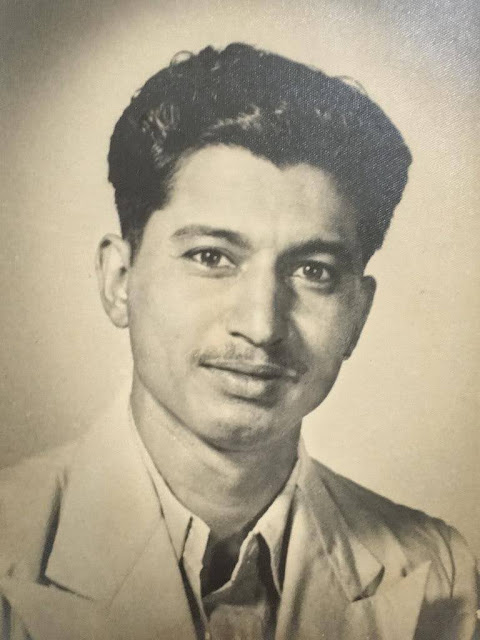
माणसाचे मोठेपण अनेकदा जवळ असण्यामुळे किंवा कुटुंबीय असण्यामुळे समजत नाही, हे किती खरे आहे. ह्याची प्रचिती आता येते आहे. तसेच माणूस समजून घेणे, हेही किती कठिण आहे, ते समजतं आहे. माझे आजोबा कै. नाना वेलणकरांबद्दल लोकांच्या आठवणी ऐकताना ही गोष्ट जाणवत राहते. त्यांच्या निर्वाणानंतर अनेकांकडून त्यांच्या आठवणी ऐकताना; त्या उत्तुंग व्यक्तीमत्त्वाची उंची जाणून घेताना जाणवतो तो अज्ञभाव. जवळचा, रोजचा असलेला माणूस समजून घेण्यामध्ये आपण किती कमी पडतो; ते लक्षात येतं.
नातवांच्या डोळ्यांपुढील आजोबांची प्रतिमा फारशी आकर्षक नाही. १९९९ नंतर वाढत जाणारे विस्मरण आणि वृद्धापकाळामुळे आलेले परावलंबन आणि शैथिल्य, हेच नजरेसमोर येते. कारण त्यांच्या खर्या कर्तृत्वाच्या साक्षीदार ह्याआधीच्या तीन पिढ्या आहेत. आजोबांना क्रिकेट आवडत असल्यामुळे क्रिकेटच्या भाषेत बोलायला आक्षेप नसावा. आमच्या समोर असलेली आजोबांची प्रतिमा म्हणजे एखाद्या मॅरॅथॉन इनिंगच्या शेवटच्या टप्प्यावरील स्थिती. त्यामुळे साहजिक त्यावरून त्या इनिंगचे मोजमाप करता येत नाही. पण जे आम्ही बघू शकलो नाही; ते काय होते; ते आता समजतं आहे. 86 वर्षे आयुष्य हे ते ८६रन्सच्या आणि ८६च्या स्ट्राईक रेटने खेळलेल्या इनिंगप्रमाणे जगले. ह्या जीवनाची व्याप्ती आणि खोली किती प्रचंड आणि गहिरी होती, हे समजून घेण्याचा आमचा प्रवास आता सुरू झाला आहे. अनेक प्रकारांमध्ये “the first of its kind” असे ते जगले. त्यांच्याकडून घेण्यासारखे प्रचंडच आहे. परंतु आमची जवाबदारी आता आहे, आता आमची वेळ आहे. जी ज्योत आमच्यापर्यंत येता येता मंदावली; किंवा अधिक योग्य शब्दांमध्ये आमची दृष्टी त्या ज्योतीची “प्रभा” समजण्याएवढी समर्थ नव्हती; त्या ज्योतीचा प्रकाश समजून घेऊन पुढे पुढे तेवत ठेवण्याचे कार्य आमच्यासमोर आहे. आणि म्हणून आता समोर येणारे आजोबांचे चरित्र हे पाऊलखुणांप्रमाणे आहे. पाऊलखुणा केवळ स्मृतीमय, रम्य आठवणी नसतात; त्यांमध्ये पुढील कार्याला दिशा देण्याची क्षमता असते. त्यांच्या आठवणी आम्हाला ती दिशा नक्कीच दाखवतील. ज्या गोष्टींसाठी, मूल्यांसाठी, लोकांसाठी आजोबा असे जगले; त्यांना अभिवादन!
त्यांच्या प्रेरक आठवणींमधील हा एक छोटासा भाग दै. लोकसत्ता आणि लेखक शेषराव मोहिते, ह्यांच्या सौजन्याने इथे सादर आहे -
नाना वेलणकर
शेषराव मोहिते
"प्रत्येक योगासनाचे फायदे काय, ते नाना एखादं स्तोत्र म्हणाल्यासारखं सांगत. त्यांचं घर आमचं हक्काचं झालं. कुठल्याही कामाचा कसला गाजावाजा नाही; त्यागाचा डांगोरा नाही..इतरांच्या विचारसरणीचा आदर करणे आणि त्याची त्याची जीवनशैली त्याच्या त्याच्या पद्धतीने अंगीकारून तशी वाटचाल करण्यास प्रोत्साहन देणे हा फार मोठा दुर्मिळ गुण नानांकडे होता."
... राष्ट्रीय स्वयंसेवक संघाचे परभणीतील ज्येष्ठ कार्यकर्ते, कृषी महाविद्यालयाच्या देखण्या इमारतीचा आराखडा बनविणारे नाना वेलणकर यांचे अलीकडेच निधन झाले. एका सुहृदाची त्यांना ही आदरांजली..
राष्ट्रीय स्वयंसेवक संघाचे ज्येष्ठ कार्यकर्ते नाना वेलणकर यांच्या निधनाची बातमी सोमवारी वाचली. मनातून चरकलो. परभणीला ज्या ज्या वेळी जाणे होई, त्या त्या वेळी ठरविलेले असे की, या वेळी नानांच्या घरी जाऊन त्यांची भेट घ्यायची! पण प्रत्येक वेळी ते राहूनच गेले. ही बातमी वाचली आणि अपराधभाव मनात दाटून आला.
परभणीतील रामकृष्णनगरमधील नानांचं घर. शंकरनगर झोपडपट्टीला लागून. परभणीला शिकायला होतो तेव्हा माझं आणि माझ्यासोबतच्या आठ-दहा तरी मित्रांचं हक्काचं, कधीही मनाला वाटेल तेव्हा जाऊन नानांसोबत गप्पागोष्टी करीत बसण्याचं जिव्हाळ्याचं ठिकाण होतं. अनेक सैरभैर क्षणी आम्ही या घरात, घराच्या अंगणात एकत्र आलो होतो. संध्याकाळी गावातून फिरून येताना किंवा लंगडय़ा मावशीच्या मेसमधून जेवून येताना थोडी वाट वाकडी करून नानांच्या घरी जाऊन येणं हा आमचा परिपाठ होता.
नानांची आणि माझी ओळख कशी झाली? त्यांचे वय तर माझ्या वडिलांहून अधिक. संघाच्या कार्यकर्त्यांचे प्रत्येक तरुण पिढीतील कार्यकर्त्यांशी संबंध असतातच म्हणावे, तर माझ्या बाबतीत तेही खरे नव्हते. मी नानांच्या घरी जाई. त्यांच्याशी खूप वेगवेगळ्या विषयावर बोलणे होई. पण नानांनी मला कधी शाखेवर येण्याचे सुचविले नाही की आग्रह केला नाही.
मी पहिल्यांदा परभणीला कृषी विद्यापीठात शिकायला गेलो, तेव्हा दहावीच्या वर्गात असताना डास चावून झालेल्या हिवतापाने खूप अशक्त झालो होतो. विद्यापीठाच्या ‘हेल्थ सेंटर’मध्ये जाऊन सगळ्या तपासण्या केल्या. रक्त तपासलं, इंजेक्शनचा पंधरा दिवसांचा ‘कोर्स’ पूर्ण केला. तेव्हा थोडी तब्येत सुधारली. मग हळूहळू इतरांचं बघून जिम्नॅशियममध्ये जाऊन व्यायामास सुरुवात केली. माझ्या ‘धूळपेरणी’ या कादंबरीत या प्रसंगाचे चित्रण आले आहे. एके दिवशी पाहिलं तर जिम्नॅशियमच्या शेजारच्याच हॉलमध्ये कुणी तरी एक शिक्षक पांढरी हाफपँट आणि वरती पांढरा टी-शर्ट घातलेले. योगासनाचा वर्ग घेत होते. मी दारात उभा राहून आतलं ते दृश्य पाहत होतो. शिक्षकाच्या सूचनेनुसार आतील पन्नास-साठ मुलं एकाग्रतेनं आसनं करीत होती. आपणही आत जाऊन त्यांच्यात सामील व्हावं असं वाटायला लागलं. पण मन धजेना. मुलं तर आपल्याच हॉस्टेलची; पण हे योगासनं शिकविणारे ‘सर’ कोण आहेत माहीत नाही. वाटायलं, ‘जाऊ द्या, बळंनं कुठं घुसावं. आपण आपला रोजचा व्यायाम करून हॉस्टेलवर निघून जावं.’ पण त्या जागेवरून हलावसंही वाटेना.
दोन-तीन दिवस असेच गेले. एके दिवशी मी असाच त्या दारात उभा होतो आणि पाठीमागून येऊन कुणी तरी माझ्या खांद्यावर हात ठेवला. मी चमकून वळून पाहिले. प्रसन्न मुद्रेनं माझ्याकडं पाहत योगासनं शिकवायला येणारे ‘सर’ म्हणाले, ‘‘का रे! तू रोज दारात उभा राहून नुसता पाहातच असतोस. तुलाही यायचंय का योगासनं करायला?’’ मी थोडासा गोंधळून म्हणालो, ‘‘फी किती असते?’’ ते हसून म्हणाले ‘‘लेका, तुला मी फी घेतो म्हणून कुणी सांगितलं! चल, आजपासून तूही ये.’’
मला मनातून खूप आनंद झाला. तरी माझी भीड चेपायला खूप दिवस लागले आणि मग त्या योगासनाच्या वर्गाची आणि तो वर्ग घेणाऱ्या नाना वेलणकरांची कायमचीच साथसंगत जमली. नानांविषयी मी सगळ्या माझ्या बॅचमधल्या मुलांना सांगायला लागलो. तर किरण चालुक्य म्हणाला, ‘‘तुम्हाला माहिताय का? नाना वेलणकर संघाचे आहेत आणि त्यांची दोन मुलं सध्या आणीबाणीत आर.एस.एस.वर बंदी असल्याने मिसाखाली जेलमध्ये आहेत.’’ मला तेव्हा संघाविषयी काही फारशी माहितीच नव्हती. तेव्हा मी म्हणालो, ‘‘म्हणजे ग्रेटच की राव!’’ तर किरण म्हणाला, ‘‘म्हणजे तुम्हाला काहीच माहिती नाही असं दिसतंय अजून.’’ मी गप्प बसलेला बघून किरण आणखी म्हणाला, ‘‘तुम्ही एक गोष्ट लक्षात ठेवा. तिकडं संघाच्या शाखा भरविण्यावर बंदी आहे म्हणून इकडं हे योगासनाचे वर्ग घे, शिबिर घे असे उद्योग करीत आहेत. उद्या आणीबाणी उठली की तुम्हालाही संघाच्या शाखेवर बोलावतील. मी अधिक काही बोलत नाही. पण त्यांच्या फार नादी लागू नका. शेवटी तुमची मर्जी!’’
किरण, प्रवीण माझे पाटर्नर. किरणचे वडील आधी शेतकरी कामगार पक्षाचे आमदार. जिल्हा बँकेचे अध्यक्ष. काँग्रेसमध्ये. प्रवीणचे वडील तर पंधरा वर्षांपासून काँग्रेसचे आमदार. इथं आल्यापासून मी किरणनं सांगितलेली कुठलीही गोष्ट ओलांडून मनानं काही करीत नव्हतो. पण योगासनाच्या वर्गाबाबत त्याचं मी काहीही ऐकायचं नाही असं ठरवलं. एक तर त्या संघाबिंघाचं आपल्याला काही फारसं देणं-घेणं नाही आणि नाना वेलणकर योगासनं शिकविताना प्रत्येक आसनाचे फायदे काय काय आहेत ते इतक्या लयदारपणे, एखादं स्तोत्र म्हणाल्यासारखं सांगत की ते नुसतं ऐकतच राहावं वाटे.
नंतर आणीबाणी उठली. आम्ही कृषी विद्यापीठात छात्र युवा संघर्ष वाहिनीची शाखा सुरू केली. त्यात नानांनी हिरीरीनं भाग घेतला. मग आम्ही हक्कानं नानांच्या घरी जायला लागलो. ते कधी हॉस्टेलवर यायला लागले. मग हे नेहमीचंच झालं. पुढे शेतकरी संघटनेची चळवळ झंझावातासारखी आली. आंदोलनं, लाठय़ा, काठय़ा, जेल, सभा, मेळावे, अधिवेशनं हे करून दमून भागून आलं की, नानांचं घर हे हक्काचं, विसाव्याचं, सुख-दु:खं बोलून हलकं करण्याचं ठिकाण झालं.
नानांची मुलगी वासंती. आमच्याबरोबर नेहमी वादविवाद, वक्तृत्व स्पर्धाना शिवाजी महाविद्यालयाकडून असायची. तिचं पदवीपर्यंतचं शिक्षण झालं आणि तिने मध्य प्रदेशमधील आदिवासी विभागात दोन वर्षे जाऊन राहण्याचा निर्णय घेतला. नानांनी इतक्या सहजपणे संमती दिली की आम्ही आश्चर्यचकित झालो. आधीच एक मुलगा आसाममध्ये असाच पूर्ण वेळ काम करायला गेलेला. कृषी विद्यापीठात आम्ही वासंतीचा सत्कार करून निरोप दिला.
नानाजी देशमुखांच्या उत्तर प्रदेशमधील गोंडा जिल्ह्य़ातील कामाविषयी आणि दीनदयाळ संस्थेविषयी नानांची आस्था अधिक. दोन-चार वेळा त्यांनी नानाजींशी माझी भेट घडवून आणली. कदाचित बीड जिल्ह्य़ात नानाजी देशमुख जे काम करू इच्छित होते, त्यात मी सहभागी व्हावं असं नाना वेलणकरांना मनातून कुठे तरी वाटत असावं. पण माझी विचार करण्याची पद्धत, शेतकरी संघटनेचं माझं काम, त्या संघटनेतील माझं स्थान याविषयी त्यांना पूर्ण कल्पना होती. म्हणूनच वयाचं खूप मोठं अंतर बाजूला सारून ते माझ्याशी सदैव मित्रत्वाच्या नात्यानेच वागले. इतरांच्या विचारसरणीचा आदर करणे आणि त्याची त्याची जीवनशैली त्याच्या त्याच्या पद्धतीने अंगीकारून तशी वाटचाल करण्यास प्रोत्साहन देणे हा फार मोठा दुर्मिळ गुण नानांकडे होता.
संघाची सर्व मोठी माणसं तेव्हा परभणीत आली म्हणजे नानांकडेच थांबत. त्या काही जणांची बौद्धिकंही आम्ही ऐकली. पण जे मनाला पटले नाही ते स्वच्छ आणि स्पष्ट शब्दात नानांना आम्ही सांगत असू. तेही तितक्याच खेळकरपणे प्रतिवाद करीत. पण शक्यतो मतभेदांच्या मुद्दय़ांपेक्षा सहमतीच्या मुद्दय़ावर काय करता येईल याचाच नेहमी विचार करीत असत.
नाना पेशाने इंजिनीअर. नागपूरच्या खरे आणि तारकुंडे या बांधकाम व्यावसायिकांनी १९६०मध्ये परभणीच्या कृषी महाविद्यालयाच्या इमारतीच्या बांधकामाची सुरुवात केली, तेव्हा या बांधकामाचे स्थापत्य अभियंता म्हणून नारायण गोविंद वेलणकर परभणीत दाखल झाले आणि नंतर ते ‘नाना’ या नावानेच ओळखले जाऊ लागले. कृषी महाविद्यालयाची एवढी देखणी इमारत आणि त्या इमारतीचा आराखडा नानांनी बनविला होता, हे त्यांनी आम्हाला कधी सांगितलं नाही आणि त्यांचं निधन होईपर्यंत आम्हाला माहीतही नव्हतं. नानांनी आयुष्यभर केलेल्या अनेक कामांचेदेखील असंच असण्याची शक्यता आहे. कामाचा कसला गाजावाजा नाही; त्यागाचा डांगोरा नाही.
आता जेव्हा केव्हा परभणीला जाणे होईल तेव्हा नानांच्या घरी निश्चित जाईन. पण तिथे प्रसन्न चित्ताने हसून स्वागत करायला नाना असणार नाहीत. ही रुखरुख कायमची राहून गेली. दुसरी एक रुखरुख मनाला सतावते आहे. नाना तुम्ही संघाचे होता; आयुष्यभर संघाचेच राहिलात म्हणून तुमच्या कार्याचे नीट मोजमापच झाले नाही की काय? मनात येऊन जाते अशी एक शंका. त्याची खंत बाळगण्याचा तुमचा स्वभाव नव्हता हे मला माहीत आहे. पण तुम्ही गेल्यावर तरी तुमचे मोठेपण आम्हाला कळो! अपेक्षा एवढीच.
Thursday, April 8, 2010
युनिकोड का प्रयोग
अपनी बोली... अपनी भाषा...
आज युनिकोड की सहायता से लेखन करने की तथा उसका अपनी भाषा के लिए प्रयोग करने की आवश्यकता सर्वमान्य है । युनिकोड के कई गुण है जिससे उसको अपनाना जरूरी हो जाता है ।
युनिकोड एक सॉफ्ट्वेअर प्रणाली जैसा है । उसको एक सॉफ्ट्वेअर की भाँति इंस्टॉल करना होता है । उसके लिए विंडोज के कंट्रोल पॅनेल में "रिजनल लॅग्वेज सेटिंग" को सक्रिय करने की आवश्यकता होती है । इसके लिए प्राय: विंडोज की सिडी की आवश्यकता होती है; क्योंकि सॉफ्ट्वेअर का वह हिस्सा उसकी सिडी से जोडना पडता है ।
लेकिन कई बार विंडोज की सिडी उपलब्ध नही होती । इस स्थिति में युनिकोड को सक्रिय करने हेतु एक लिंक है ।
http://omicronlab.com/download/tools/iComplex_2.0.0.exe
http://www.omicronlab.com/tools/icomplex-full.html
यहाँ से कॉम्प्लेक्स स्क्रिप्ट को लोड किया जा सकता है ।
इसको लोड करने के पश्चात http://bhashaindia.com/Downloads/Pages/home.aspx इस लिंक से आप हिंदी, मराठी, বাংলা, ગુજરાતી, ಕನ್ನಡ, आदि भाषाओं के लिए आपके ऑपरेटिंग सिस्टीम के अनुसार उचित Indic Input फाईल लोड कर सकते है । उसके पश्चात इसी साईट पर दिए गए निर्देशानुसार अपने विंडोज सेटिंग में जाकर कंट्रोल पॅनेल में रिजनल और लँग्वेज सेटिंग में चुनी भाषा को सक्रिय करना है ।
विकल्प:
इस साईट पर जाने के अलावा एक और विकल्प भी उपलब्ध है: http://baraha.com/ इस साईट पर युनिकोड का रायटिंग पॅड का सॉफ्ट्वेअर नि:शुल्क उपलब्ध है । उसे लोड करने पर युनिकोड को सक्रिय किया जा सकता है ।
ये दोनो विकल्प किंचित जटिल है । किंतु एक बार युनिकोड सक्रिय होने पर मनचाही भाषा और मनचाही बोली में लिखना अतीव सरल है । यह जानकारी निम्न संदर्भ साधनों के बिना नही उपलब्ध हो सकती थी, इसलिए उन्हे धन्यवाद कह कर इस चिट्ठे का समापन होता है ।
संदर्भ वाचन:
1.http://tips-hindi.blogspot.com
2.http://baraha.com/
3.http://bhashaindia.com
आज युनिकोड की सहायता से लेखन करने की तथा उसका अपनी भाषा के लिए प्रयोग करने की आवश्यकता सर्वमान्य है । युनिकोड के कई गुण है जिससे उसको अपनाना जरूरी हो जाता है ।
लेकिन कई बार विंडोज की सिडी उपलब्ध नही होती । इस स्थिति में युनिकोड को सक्रिय करने हेतु एक लिंक है ।
http://omicronlab.com/download/tools/iComplex_2.0.0.exe
http://www.omicronlab.com/tools/icomplex-full.html
यहाँ से कॉम्प्लेक्स स्क्रिप्ट को लोड किया जा सकता है ।
इसको लोड करने के पश्चात http://bhashaindia.com/Downloads/Pages/home.aspx इस लिंक से आप हिंदी, मराठी, বাংলা, ગુજરાતી, ಕನ್ನಡ, आदि भाषाओं के लिए आपके ऑपरेटिंग सिस्टीम के अनुसार उचित Indic Input फाईल लोड कर सकते है । उसके पश्चात इसी साईट पर दिए गए निर्देशानुसार अपने विंडोज सेटिंग में जाकर कंट्रोल पॅनेल में रिजनल और लँग्वेज सेटिंग में चुनी भाषा को सक्रिय करना है ।
विकल्प:
इस साईट पर जाने के अलावा एक और विकल्प भी उपलब्ध है: http://baraha.com/ इस साईट पर युनिकोड का रायटिंग पॅड का सॉफ्ट्वेअर नि:शुल्क उपलब्ध है । उसे लोड करने पर युनिकोड को सक्रिय किया जा सकता है ।
ये दोनो विकल्प किंचित जटिल है । किंतु एक बार युनिकोड सक्रिय होने पर मनचाही भाषा और मनचाही बोली में लिखना अतीव सरल है । यह जानकारी निम्न संदर्भ साधनों के बिना नही उपलब्ध हो सकती थी, इसलिए उन्हे धन्यवाद कह कर इस चिट्ठे का समापन होता है ।
संदर्भ वाचन:
1.http://tips-hindi.blogspot.com
2.http://baraha.com/
3.http://bhashaindia.com
Sunday, March 28, 2010
वेल डन "वेल डन अब्बा !"
"वेल डन अब्बा" यह हिंदी फिल्मी दुनिया से निकली एक नयी फिल्म है । कई मायनों मे यह फिल्म एक आनंदायदायक तथा प्रेरक अनुभव है, जो हमारा उत्साहवर्धन करती है । स्वदेस, रंग दे बसंती जैसी फिल्मों की श्रेणी में यह निश्चित रूप से आती है ।
यह फिल्म कई तरह से एक क्लासिक उदाहरण की प्रस्तुति करती है । सामाजिक पृष्ठभूमि में आज हम कई सारे मुद्दे, अनसुलझे सवाल तथा दिक्कतें देखते है । कई तरह की समस्याएं, प्रॉब्लेम्स, परेशानीयां हम भुगतते है । यह फिल्म इनमेंसे कई मुद्दों को बहुत सराहनीय एवं सरल तरिके से प्रस्तुत करती है । भ्रष्टाचार, सरकारी योजनाओं का जमिनी सच, ब्युरोक्रासी की सच्चाई, ग्रामीण लोगों की समस्याएं तथा इश्युज, इतनाही नहीं, सामाजिक संबंध, मुस्लीम समाज की परिस्थिती, उससे जुडे हुए जेंडर (लिंग-भेदभाव) इश्युज इन सभी का बहुत सराहनीय चित्रण इस फिल्म में किया गया है ।
आज की फिल्म इंडस्ट्री में इतनी सामाजिक संवेदनावाली फिल्म पाना एक सुखद अनुभव है । फिल्म ने सिर्फ जमिनी सच्चाई का चित्रण ही नही है, अपि तु इस परिस्थिती का सामना करने के तरिके भी बताए गए है । इस नजरिए से यह फिल्म एक जागरूकता के साधन से बिलकुल कम नही है । इसमें सूचना का अधिकार (राईट टू इन्फॉर्मेशन), सामाजिक आंदोलन का प्रयोग कैसे किया जाता है, यह दिखाने का रोचक प्रयास किया गया है ।
इस फिल्म की कहानी आंध्र प्रदेश के एक गाँव की है । इस गाँव में किस तरह बावडी- कुआँ बनाने की योजना का क्रियान्वयन किया जाता है, उसमें किस तरह का भ्रष्टाचार होता है, लाभार्थियों को कैसी कैसी दिक्कतों का सामना करना पडता है, यह दिखाया गया है । सिर्फ दिक्कतें नही; उसकों ठीक करने के प्रयास भी दिखाए गए है । इस प्रक्रिया से जुडे सभी मुद्दे फिल्माए गए है ।
इसके अलावा ग्रामीण सामाजिक जीवन में महिलाओं की स्थिती, मुस्लीम महिलाओं की दुनिया, उनकी बदलती सोच, उनके ख्वाब, उनके व्हॅल्यूज भी दर्शाए गए है । वंचित, पीडित अवस्था में भी कुछ करने का जस्बा क्या होता है, इसका एक उदाहरण दर्शाने का प्रयास यह फिल्म करती है । मनुष्य के आपसी नाते- रिलेशन्स, उनका बढना, जुडना भी बहोत अच्छे से दर्शाए गए है ।
ऐसा कहते है, की बंद मानसिकता को शिक्षा या ज्ञान से आज़ाद करने में दिक्कतें आती है । जहाँ ज्ञान पहुंचना कठिन है, वहाँ इस तरह फिल्म के माध्यम सें विचार पहुंचते है; तो नि:संदेह वे ज्यादा प्रभावी परिणाम ला सकते है । वास्तव जीवन को इतने खूबी से दर्शाया गया है, कि नि:संदेह लोग उसे खुद के जीवन से जोड सकते है । अगर इस फिल्म को जगह जगह दिखाया जाता है; तो नि:संदेह पुराने खयालात एवम् परंपरा के बंधन में जकडी हुई मानसिकता से खुद को आज़ाद करने की प्रक्रिया को बढावा मिलेगा । क्यों की इसकी परिभाषा तथा मॅसेज अत्यंत रोचक, सरल चित्रण द्वारा दिया गया है । अत: इस फिल्म को अवश्य देखना चाहिए; तथा उसे औरों को दिखाना चाहिए जिससे इसके मॅसेज को तथा इसकी प्रेरणा को बांटा जा सके ।
Wednesday, March 10, 2010
सच्चाई समझने का प्रयास...
यह पोस्ट एक चरित्र-ग्रंथ पर आधारित है । "नरेंद्रायण" - लेखक श्री. गिरीश दाबके, नवचैतन्य प्रकाशन. यह चरित्र- ग्रंथ जाने माने नेता तथा विवादित पुरुष नरेंद्र मोदी पर केंद्रित है । जब उनको जाना- माना कहा जाता है; तो प्रश्न आता है कि उनके बारे में क्या "जाना" जाता है और क्या "माना" जाता है ? या फिर वे कितने "जाने" जाते है और कितने तथा कैसे "माने" जाते है । जानने का सम्बन्ध प्रचिती से- अनुभव से है; तथा मानने का सम्बन्ध विश्वास या युँ कहे तो बायस से है ।
प्रस्तुत ग्रंथ एक ऐसा उदाहरण और प्रकाश डालनेवाला माध्यम है; जो हमें बताता है की सच्चाई क्या नही है और क्या हो सकती है । जो भी हम मान के चलते है; उससे विपरित सच्चाई हो सकती है । ग्रंथ हमे कोई भी मत या बायस बनाने से पहले सच्चाई को जानने की, समझने की तथा उसका अभ्यास करने की आवश्यकता पर प्रकाश डालता है ।
आम इन्सान की नजर में नरेन्द्र मोदी का नाम सुनतेही क्या आता है ? ब्रेन स्टॉर्मिंग करें तो ऐसे ही कुछ उत्तर मिल सकते है - Genocide, Mass murder, riots, fundamentalist ऐसे ही । या युँ कहिए कि जो व्यक्ति सच्चाई नही जानता; उसकी ऐसी धारणा हो सकती है । लेकिन जब इस ग्रंथ मे "सच्चाई" के कम सुने पहलूओं को बताया जाता है; तो धीरे धीरे समझ में आता है; की सच्चाई उपर दिए गए अंग्रेजी शब्द नही है । तो आखिर सच्चाई क्या है ? कहना होगा की यह ग्रंथ काफी हद तक नरेंद्र मोदी से संबंधित "Frequently Asked Questions" का उत्तर देता है ।
जो भी सामान्य अवधारणा होती है; वो ज्यादातर मीडिया के कथन पर आधारित होती है । इस बात को यहाँ जानना जरूरी है की हमारी मीडिया के 90% मालिक या आर्थिक स्रोत विदेशी ताकतें है । क्या हम केवल उनके बयान पर विश्वास करें; या जमिनी स्थिति को जानें ? मीडिया कहती है की बीजेपी मनुवादी पार्टी है । पर सच्चाई है की इसी पार्टी के सबसे अधिक एस-सी, एस- टी तथा ओबीसी सांसद है । मोदी को हिटलर कहा जाता है; पर वास्तव यह है की उनके द्वारा बढावा दिए गए पतंग महोत्सव से मुस्लीम कार्मिकों को करोडों का मुनाफा हुआ, उनका व्यवसाय बढा है । गुजरात को विकृत राज्य कहा जाता है; पर यह वही राज्य है; जहाँ पर आदिवासियों को सबसे अधिक जमीन का वितरण हुआ है तथा उसका आदिवासियों पर बजेट अलोकेशन भी सबसे अधिक है । इस प्रकार इस पुस्तक में विस्तार से सच्चाई के कम जाने गए पहलूओं का अच्छे से विस्तार किया गया है ।
नर्मदा बांध तथा विकास की नीति पर भी इसमें उल्लेखनीय भाष्य है । मीडिया और उनके आंतर्राष्ट्रीय समर्थक कहते है की नर्मदा पर बांध से आदिवासियों का नाश किया जा रहा है । प्रस्तुत ग्रंथ में सीधा सवाल किया गया है कि ऑस्ट्रेलिया- आफ्रिका से लेकर अमेरिका तक जिन लोगों ने आदिवासियों को लूटा, उनकी संस्कृति को ध्वस्त किया; वो लोग भारत के आदिवासियों का पक्ष कैसे ले सकते है ? प्रस्तुत पुस्तक में संबंधित एनजीओ तथा आंतर्राष्ट्रीय फॅक्टर्स से संबंधित घटनाचक्र तथा पहलू विस्तार से बताए गए है ।
इतनाही नही; यह ग्रंथ सिर्फ चरित्र ग्रंथ ही नही; अपितु हिंदुत्व- बीजेपी की विचारधारा पर एक सराहनीय भाष्य है; जो हमें यह मॅसेज देता है; कि किसी भी तरह का मत बनाने से पहले हमें अच्छे से जमिनी स्थिती को खुले मन से समझना चाहिए; विस्तार से अभ्यास करना चाहिए । आज के समय में जब हर एक गुट अलग विचारधारा तथा पहचान मानता है; तथा उसमें ही खुद को सीमित रखता है; यह बात और यह समझ बहोत अहम बनती है ।
Monday, March 1, 2010
GOING FURTHER PLACES . . .
GOING FURTHER PLACES . . .
Contents
1. Introduction
2. Critical assessment of models of social intervention
3. Emerging needs of a better model of development
4. Vision of better models of intervention
5. Linkages with market
6. Equitable power distribution
7. Watershed development and alternative sources of renewable energy
8. Epilogue
About The Writer:
• Name:Niranjan Girish Welankar.
• Date of birth: 24th November 1984.
• Education: Master’s in Social Work with Urban and Rural Community Development; Bachelor of Arts with Political Science and French and Diploma in German; Diploma in Teachers Training for yoga.
• Occupation: Currently working as a combination of a social researcher, consultant, documentation expert and translator.
The writer strongly wants to work for benefit of the deprived, poor, vulnerable and needy people up to highest possible extent. This obsession is generated out of sensitivity towards social problems, contradictions, inequalities. The writer strongly wants to contribute for betterment of the people at large who are suffering from problems such as poverty, ignorance, displacement, suppression, lack of opportunities for growth and so on.
The writer has experienced some current practices of solving these issues or problems; and so thinks to work in a better way to get more output. The following discussion is thus the process of visualizing a better set of models and intervention. This is a sequel write up or an advanced version of the write up – Going places (available at www.niranjan-vichar.blogspot.com); hence initial basic concepts are put little aside and the discussion goes to further debate. This discussion has backward and forward linkages from the thoughts expressed in ‘Going places’; so that there are a few repetitions in this writing.
1. Introduction
DEDICATINON:
This sharing, this writing is dedicated to those who have suffered from violence, hatred, suppression, displacement-development, inequalities and negligence and to all those who have sacrificed themselves for the society and the nation. The writer takes the opportunity to acknowledge the support of all including the members of Karve Institute of Social Service.
OBJECTIVE OF THIS WRITING:
In one sense, this is person centered reflection. Through the writing, the writer wants to have better clarity about his effort, to seek guidance from the expert and overall sharing for learning and better understanding. The writer wants to improve his vision, to share his thoughts, to try to improve in his vision as well as to develop a debate in the society for the desired objective i.e. Work for betterment of the needy people at large. Necessity of this writing comes out of progressive journey towards the desired goal. When one tries to move, one comes across different experiences, different perspectives and impressions, they are about problems as well as solutions. This is obvious as the social conditions are so dynamic, complicated, so one has to check for errors or limitations and seek for updates. Such reflective writing and sharing is one good tool to do this. So while writing this, the writer aims to have better clarity, better understanding about his journey towards the desired goal. This is basically a learning exercise. So you are requested for your valuable inputs, feedback and guidelines for fulfillment of the objective of this writing.
Thanking you.
- Niranjan.
March 1, 2010.
niranjanwelankar@gmail.com;
www.niranjan-vichar.blogspot.com;
2. Critical assessment of models of social intervention
Let’s here initially look at what is meant by models of social intervention. Interventions are mechanisms of controlling in a situation in which problems, inequalities or maladjustments exist. Let’s also look at what is meant by development; particularly sustainable development; as the development that is not sustainable; cannot be regarded as development. We can describe sustainable development in the following way:
• It is inclusive of all social and environmental entities.
• It is affordable and accessible to all.
• It leads to rise of all and fall of none; be it human or natural stakeholder.
• It has a lot of value base in form of harmonious social relations (equality, fraternity, freedom and justice)
• It is based on equitable distribution of resources among human and environmental stakeholders. This leads to controlled needs and sensitivity towards others.
Current models of intervention can be in any form such as projects of a Non Governmental Organization or the initiative of the government such as National Rural Employment Guarantee Act. Here we are going to assess these models. The following can be mentioned as some common characteristics of these interventions:
i. They are sponsored externally at a large level; say by a national level or international sponsor or funder.
ii. Their set up is funding driven in nature. The projects or interventions start in general on the funds they have. This sometimes leads to the possibility of hypothetical work; for instance as there are more funds available for HIV; organizations tend to go for HIV AIDS related projects; or if there is the advertisement from the central government; then NGO’s apply for that; that in many cases is regardless of the needs in the area of operations. No doubt; in some cases; such funding or support is so crucial; they can start their activities; but at the same time; there is always a danger that these organizations are struck in the same project. That can become a patch-work; a routine exercise; without much output towards the vision and mission.
iii. As this kind of work is economically mostly unproductive i.e. it does not generate money in itself; the project staff is largely dependent on the sponsor source. It leads to a lot of adjustments at the implementation level. The organization has to sustain all expenses out of the funds it is gaining; it creates a lot of limitations. This limits the economic growth of the workers and slowly can encourage malpractices and corruption.
iv. Importantly; basically; such kind of interventions are necessarily to be so focused and intensive activities against many odds; for example take the example of strengthening of village health and sanitation committees or village mobilization. It requires so much efforts on the part of the members or field workers of the organization and the scarce funds are neither able to compensate for this work nor motivate them. This increases deviation from the visualized output and actual output.
v. This puts breaks on the economical growth of the workers and so they are left with two choices- either leave this position and go for another better or continue adjusting with the conditions. In any case; the strength of the intervention reduces as the better persons leave and the remaining work as a routine activity.
This can be summed up. Models of the current interventions are in a way limited like industries in down market. Everything is not necessarily up to the mark. Only a few are gainful; who are positioned at a higher level or decision- making level. The below the mark phenomena can be observed in all aspects of work-force. There are many organizations which are so rich in experience; but their field level work is so dependent on the funds supply.
Let’s discuss about the committed activists and leaders who work voluntarily and without external support. They do present one remarkable example of genuine work and concrete impacts and output. They can be regarded as the pioneers on the path way of sustainable development. However they are so less in number; that they cannot be regarded as a part of this model of interventions.
We want to understand that as the NGO’s emerge from and are dependent in a way on the current systems; we cannot look at them for a very high level of system improvement. Up to an extent; yes; but not beyond that. As NGO’s are dependent on the funding and various social forces; they are not able to work against that; hence their intervention is cannot be regarded as an independent work in absolute terms. There are NGO’s who work for personality development or career development of the youth. What they actually succeed in doing? They produce the better stakeholders in the system called as a multinational company or a government department. That can give material gains for some; but sustainable development is greater than material development.
We can conclude this discussion here by seeing that the current models of intervention are likely to be stereo-type and even though they produce some initial result; they are likely to deviate from their greater role. This is because any change cannot be said as sustainable until it is a structural change and the political and market systems would oppose such change; so there are market related and power related linkages in that.
3. Emerging needs of a better model of intervention
Here we will try to visualize needs; due to which a better model is required. The following are some needs that result out of the above discussion.
i. Affordability and accessibility for all including the most vulnerable groups (like participation in a Satyagrah of Gandhiji).
ii. It should be need based for everyone; not as an imposed action like an imposed or compulsory participation in a meeting.
iii. Locally built structure and local sustainability and sufficiency.
iv. Uniform or equitable distribution of power.
v. Decentralized and localized decision making structures and methodology.
vi. Individualized methods to include diverse potentialities and characteristics.
vii. Modern values such as transparency; accountability; cooperation and demand driven approach.
viii. Entrepreneurship and orientation to production and more effective and the effect should be displayed practically.
ix. Ability to address structural issues and more severe issues such as Naxalism; terrorism and identity crises and international pressures.
x. Creative thinking and indigenous methods.
These are some attributes of sustainability; we regard these as the needs mostly partially fulfilled by the current models of intervention. Let’s elaborate these needs so we can visualize a framework to fulfill them.
i. If our manner of intervention has to be affordable and accessible to all; it has to be so simple in nature like Gandhiji’s methods. He always used the most practical tools; wherein the most common Indian could participate. If we look at the contemporary methods; they are super specialized; in that sense that they need special efforts; they are not common part of the behavior patterns. In other words; we have to find smart ways for the current trends of hard ways. For example; if we use village meeting for village mobilization; we have to find another more effective tool such as utilization of street play or a film show instead of meetings.
ii. Interest can be created with the help of unexpected things. It can be done through social audit- public hearing which appeals to the emotions of the people.
iii. Instead of going for involvement of external forces; we can organize informal local interventions such as formation of water-shed related constructions with the help of Shramadan or use of local manpower for power generation. Such experiments need to be made a norm and not an exception.
iv. Social power or importance given to a person is like a water tank which contains a lot of water; but it is not distributed where it is required. There are ways which are helpful for redistribution of power. Social audit, public hearing, visual presentation focusing deprived needs are some tools. But they need to be made more appealing and stimulating.
v. Local level initiative means which is self sufficient in itself. Example of this kind of intervention can be village level groups who voluntarily work or a SHG formed by women from their savings and not with much the help of outsiders.
vi. Individualized methods mean the methods which give adequate space to local wisdom; local strengths; human as well as natural. It is closely related with creative thinking and a deviation from the stereo-type thinking. It can be visualized in form of a small scale industry of a tribal handy-craft or tourism development in hilly areas or local level processing and marketing of natural resources.
vii. Transparency; accountability and direct participation can be ensured if the process is at a small level. Once the thing becomes top- bottom or multi-lateral; it gets complicated and these values are blocked. Instead of this; if there are informal functionaries; these values can be observed. That needs organization of community and local level stakeholders; so that they can check malpractices.
viii. In order to make significant structural impacts and improvements in significant issues such as national and international problems; it would require a lot of concentration and focus of power; we will discuss that in a separate discussion once we finish with our draft models.
ix. As we have said; the current models hardly include economically productive activities; activities that can be looked as self- sufficient for the intervention. In order to improve on this; we have to go for entrepreneurship related income generation activities. That would be help to support the organization in itself. Examples of such an activity can be use of soft skills by local youth for income generation and supporting other youth for education.
We have to accept that our new model of intervention is also fully vulnerable to the inadequacies and problems of the current models of intervention. It can also be said that the different between the two lines of thinking is in degree and not in kind; the same processes and subject matter are common in the both. That also holds for some extent; but more will be clear when we discuss our examples of draft models. But for that; we need to try to think out of the room; to think different and without minding the biases of the current framework. This process will open doors for us where we can contribute in more unique and effective way.
4. Vision of better models of intervention
Here we are trying to visualize or simulate better models of intervention. We are trying to find better processes and methods to obtain desired results in less time and with more output. We try to conceptualize a model within the framework discussed above; i.e. which has all attributes of sustainable development. They are applications of creative thinking and uncluttered mind; which is not biased due to the social systems and barriers.
Model I: An informal youth group
This is a visualization of a group of youth; mainly rural youth; who want to do something for their village and locality. Some of them are students and some of them are doing some job. How they can contribute for their community? Like any rural or semi rural community; this community is also in need of knowledge about government schemes; facilities; procedures and agricultural extension services. The youth group decides to work as an informal and mobile resource centre. For that; they are willing to contribute RS 250 per month and give some individual time. This group can begin its activities with the activity of information sharing.
Objective:
To work as information provider in the following areas-
1. Educational and vocational guidance to the rural youth.
2. Various schemes of the government
3. Advanced practices in the agriculture
4. Support for any social or individual problem at the community level.
Methodology
As the members of the group are scattered and they do not live at the same place and already involved in their activities; it is not desirable to form a centre for any work. So the best option is to work without any specific logistics structure. As the members are not available at one place; it is better to work indirectly. The activity of information sharing suits this condition.
For information providing and sharing; there is no need to have a centre or an established structure. It can be done in many feasible ways. Information sharing can be done through phone calls; individual visits; visit to expert; letter, email, blog etc. There is no need for larger investment and compulsion of staying at one location. One thing is certainly required and that is management of necessary information. It can be through any area as mentioned above and any social or individual problem. So the group has to have the networking with the experts in these fields in order to provide appropriate information.
For reaching to the people regarding the service of information sharing; the best and cost effective option is to use ST transport buses, colleges and hotels. If a few information brochures are prepared; then they can be stick into buses, college notice boards, hotels etc; from where its potential beneficiaries would catch it. As the public facility is used; its outreach will be higher. It can reach to all nearby villages. So that way; after some time; the beneficiaries would come seeking required information. Once the need is expressed; then it can be fulfilled within 2 days by using the network of friends in social field.
The group can begin its activities in this way. The monthly contribution would be useful for preparation of brochures, placards, keeping record of all this information sharing, and if necessary, for phone calls and travel. Once this group gets recognition and proper networking across a few villages; it can expand its activities.
Prerequisite and requirements on the part of the members
1. Regular time – say average half an hour everyday with more on week end.
2. Regular monthly contribution.
3. Support in kind i.e. preparation of brochure, giving contacts for some work requirements, phone calls for updating, email correspondence, prompt follow up of needs expressed.
Rationale
Rationale of this activity lies in the fact that it is one of the practical and still very useful activities that the group can undertake. It tries to match with the deliverables of the members and some needs of the community. This way the group can create its identity and networking among the people and then can go for other direct interventions or projects as its strength would increase.
This is one way in which local level activities can begin from zero. As the group grows; its members progress; it can increase its monthly contribution and start running a small supply service. After a few years; it can become a small business.
The idea behind this visualization is that instead of taking external money and other help; let’s try to arrange and manage things at local level and start growing in terms of socially (i.e. through the intervention) and economically; through the supply service and later on the business. This approach has entrepreneurship related aspects and it is something like 50% NGO; 50% business model. If proper methods and approaches of business are followed i.e. control on expenses and building of assets; then the business can grow; making this model effective. The basic idea is to start production and earning; sooner or later; so that the members can strengthen their position and take it further.
NGO and business
This raises a classic debate on NGO and business. There can come up many perspectives. Some would say that NGO people have different perspectives; they know how to work in the field; how they can go into business. Another perspective suggests that NGO people are capable of doing many complicated processes such as handling of legal cases; organizing public hearings; mobilizing communities; so how they cannot effectively work in business. For some; it would raise ideological questions. NGO’s and movements work on specific ideologies; how can they indulge in business? These perceptions are largely part of the stereo- type thinking and system biases. Practically; NGO people are well able to do business. In fact; in many cases; work of NGO has become like a business; they purchase projects and give services in form of commodities to the beneficiaries. NGO work is said as non profit (even if it many times has profit motive) while business is clearly aims for money.
Another debate can rise and that is ethical and environmental. It is perceived that the business involves malpractices or illegal practices. If NGO’s also start doing it; it would bring NGO’s ethics and quality. This is one angle. The other angle is that we can go for more rigorous efforts and use our critical and creative thinking for bringing the same results for which one might need malpractices. Another approach would suggest that it is easy to work with the help of projects and so difficult to earn through business for working. Again; there are ways and ways; but that need unbiased and uncluttered mind. If an organization develops local sources of income through entrepreneurship or business- like activities; then that is a great asset; it would qualitatively help itself. This line of thinking also gives rise to many WH questions. Their answers are case- specific and situation specific. It is dependent on the skills and capacity of the organization; its area of operation; market analysis of that place. In any case; there are likely to be many alternatives and options if they are identified and recognized.
Model II: An Independent worker
This is another visualization of a better model of intervention. Here we are not thinking purely from the NGO perspectives. We are now combining many different things to make a better impact and difference. We are visualizing an independent worker who can contribute a lot by working in the different way. Generally there are not opportunities of great economic growth in an NGO. Hence a person who has fairly good competence in documentation; writing; research; training and field work can go for independent work or free-lance consultancy. When he/ she works in one organization; the growth opportunities are limited and the area of his/ her contribution is also limited. But if the same person works as an independent writer + worker + researcher + documentation expert + resource person etc; then he/she will earn more and contribute far more. This has been possible with the help of modern technology – computer and internet. Now in terms of soft output (e.g. which is given on computer); one can work for as many organizations as one can. This opens doors for those who can work with the help of computer. It includes a lot of writing related and computer related jobs. With their help; earning also can be done; income also can be earned and many organizations can also be supported. Social networking sites and blog are also useful for lobbying and identifying strategic partners apart from knowledge explosion. This way; there are ample opportunities for the skilled persons to earn more and contribute more (in form of documentation; initiating for PIL- Public Interest Litigation, reporting; sending news; article writing and book writing for awareness and stimulus etc). What really needed is to take a non conventional stance.
Model II: 50% NGO and 50 % business = 100% influential.
Let’s now visualize a model which we discussed. The following example would clarify what means by a combination of an NGO and business on equal terms. Lets’ take an example of a small society registered under the society’s registration act 1860 in a small village. How this can be evolved as a combination of business and NGO? Any business requires a set of assets which can be delivered and sold into a proper market. We would need to see for that in the context of the organization. We need to look and answer these questions –
i. What are the strengths of the members of the organization?
ii. What forms their core competence?
iii. What material resources the organization has?
iv. What are the overall market conditions; what are trends in that; for example; level of consumption; class of commodities and services required and level of its supplies.
v. In terms of the deliverables on the part of the members of the organization; there would be need of a market assessment; regarding feasibility of that in the market.
These steps can be helpful to decide a model of business. It can be any entrepreneurship activity such as tuition class; establishment of a computer centre; formation of a centre for legal advice and career guidance and so on. The following can be important and necessary conditions.
i. Any venture should be low- cost and without much inputs (e.g. loan; grants) from outside. The activities should be managed in such a way that many tasks would take place without much effort such as use of stickers/ posters on public transport buses for publicity and outreach rather than village- to village visits and meetings.
ii. The organizations economic activities should follow the norms of – 0% Non productive investment, 25% saving; 25% investment; 25% for intervention (Expenses of NGO activities); 5% share market investment and 20% reserve. This will be useful to grow sustainably.
iii. The organization should focus on genuine and vital activities only and avoid unnecessary stuff such as impractical and irrelevant research/ surveys and ineffective intervention such as imposed meetings; compulsory events and get- together.
iv. Continuous efforts to upgrade competency levels of the members of the organization. Depending on the aptitude, competence and interests of the members; they can undergo further trainings and capacity building. For example; if there is a member who is interested in hardware and computers; then he can go for a training on hardware and networking and can become a professional in that field within 6 months; so the organization can also run a centre for hardware related services.
The idea behind all this is to make money out of small money; be it in any legal and socially acceptable way. Money is not everything; but it is something and something very effective. Apart from money- making; the model also needs to have adoption of social values; human rights; equality; principles of self control and mutual respect along with the practices such as Vipassana and Yoga. In terms of cricket; scoring runs can be compared with earning money through entrepreneurship while actual field work is staying at the wicket and building partnerships. It is remarkable that modern cricket matches are won with the help of best combinations of scoring runs and staying at the wicket. The same applies to NGO field also. This is not so untouched or novel. There are many efforts; many experiments which demonstrate the model of locally sustainable agencies. Here we halt the discussion of better models and go towards structural issues involved in them.
5. Linkages with market
Here we will discuss various market related dynamics. Whenever we try to start an intervention in the field or any social situation; we need to think on the structural aspects related to it. Greater social changes or reforms can be obtained with the help of structural issues rather than a few case- interventions. For example; if we work on the issue of child labor in 5 villages; then we might be able to improve the situation up to those 5 villages. But; if we work structurally; then we might be able to improve the situation in the state or in the region; say with the help of advocacy led by scientific research and concrete substitute arrangements. Market is one significant and universal entity which we need to intervene in at many times and with different approaches. It is not irrelevant or out of our purview. Let’s take the example of salary given to employees in an organization. It has a lot to do with the market situation. Market is practically a driving force; a strong social system; as strong variable which affects every social circumstances.
Let’s go into what we need to do with this structure. For that; we need to take a look at the market situation in brief. The following are highlights of the market situation:
i. Market is controlled and dominated by a small group of affluent people like industrialists; big political leaders.
ii. Market variables such as agricultural prices or remuneration to the unskilled workers are controlled by this group.
iii. The role of government as a regulator and a stabilizer has been reduced significantly; as after 1991; government is stepping down from many of its responsibilities and failing to complete the minimum requirements and that is resulting in marketisation of services and commodities; for example; if the government is unable to provide adequate transportation facilities; private players come in the picture and facilities/ services provided by them are not for all and with all or the inability of the government to generate required electricity leads to the emergence of inverters; UPS which are market commodities and the rich only can PURCHASE that.
In this context; the following can be areas of intervention.
i. Evolution and development of locally comfortable and compatible mechanisms of income generation and production of various commodities or services. Its example can be entrepreneurship of Self Help Groups that generate money and they are economically gainful activities.
ii. Assistance to the marginalized groups to strengthen themselves in the market. Its example can be a support in kind and in money given to youths from a nomadic tribal community for undergoing hardware and networking courses with the help of which they can sustain themselves economically.
iii. Creation of alternatives and parallel framework so as to avoid exploitation and malpractices. For example if the engineering colleges are few and they also need high donations; we can initiate for a people run engineering college or short term courses to impart the practical vocational knowledge. Another example of this kind can be to develop competent model of non- formal education to avoid marketised education; to invent and utilize local method of power generation to avoid market rates. Of course; all these mechanisms need long term participation from a significant number of people.
The best of its kind of model would be invention and production of technological tools which will empower the rural masses. Such a technology should have the following qualities-
a. Affordable and accessible to all – i.e. its investment cost should be minimal; e.g. a zero cost participatory nallah bunding; training on Yoga.
b. It should generate concrete production that has respectable value in the market; so that it can gainfully economically empower its users.
It should use local wisdom and indigenous knowledge; it should use creativity and individual competence rather than copy paste and stereo-type methods.
iv. To create awareness about fair and legal practices and advocate the issues of deviation from the constitutional norms. For example; a public hearing on child labor in sugar cane factories can be helpful to address the issue; for the workers as well as the media; or a study on transportation practices in rural areas can help for increasing quality of services given by public transport and thereby free the local people from the private transporters.
These modes of intervention are not different from the traditional methods. The difference is not in the process; but in the approach. Now let’s discuss another all- influential; significant crux of social interactions i.e. political situation or power related social circumstances.
6. Equitable power distribution
Power here is referred as the capacity of influencing or the extent of importance one person has in the society. Our better models of intervention would not function properly without properly addressing the power related issues. For example; let’s recall the example of remuneration issue of the sugar cane workers. We can do awareness generation; we can make the legal bodies aware about that. But would the situation change without support of the landlords or the big political leaders who control these factories?
It is said that development and under-development is not so ad- hoc or spontaneous; it is a political process. "Women are dying, not because diseases we cannot cure, but because, societies are yet to make the decision that their lives are worth saving."
It is a matter of debate to decide how much this analytical statement holds true. But no doubt, there is reasonable meaning in it. The message of that statement is that social problems are more to do with inequalities related to power than to facilities or services. Most of the social problems are rooted in inequalities and suppression. So as long as these inequalities remain, any solution will not be long lasting. Because most of the problems are due to inequalities and so till inequalities remain, they will also remain. So there is need to address these inequalities firstly. All inequalities are so strongly related with power inequality. Hence we need to discuss power dynamics.
Power can be referred to as the ability to influence others, ability to influence decision making. It is related with importance one has in the community. Power dynamics are inter- related factors which are related to power. Power can be referred as social money i.e. what money is in economy, power is in the society. Power is exerted or applied through one or more of the following channels-
1. Money
2. Property
3. Social status
4. Education
5. Occupation
6. Knowledge
7. Understanding and insights
8. Physical health
9. Relations with the powerful group or hierarchs, such as leaders, landlords.
10. Social relations and connectivity with the community and society.
11. Numerical strength.
In this context, power inequality can be said as instrumental to social problems. Power inequality indicates lack of equality, lack of balanced social relations. This leads to one's domination over another and so all the stuff of exploitation, suppression, negligence begins. Conversely, if these inequalities are removed and all are brought to one level, there will be hardly any scope for exploitation, suppression as it would be immediately opposed, checked and neutralized. This is nothing but situation of 'haves' and 'haves not' according to Marxian analysis of dialectical materialism. Let's visualize this with an example. Let's take any example of social problem caused by inequality. Let's take a case of a doctor demanding money from a poor woman for checking up her. As long as that woman is socially less powerful and the doctor is more powerful, he can take the money. But if both become equally powerful, he would not be able to take the money easily. This theme of thinking indicates the need to work on power inequalities rather than on facilities or services. We will discuss this line of thinking and try to analyze it, to visualize better ways emerging out of it.
The biggest problem in this approach is that power cannot be equated without having high or concentrated power and concentration of power leads to corruption. It is rightly said that “POWER CORRUPTS.” The question is of making such an efficient arrangement in which the power would be concentrated; strengthened; but it would be used or executed only in the interest of the disempowered. Power dynamics can be compared with a power tank. The power is concentrated in the tank at a height of 100 metres and the pipes are connected to distribute that power to the lower areas; but the water has not been filled into the pipes as its gate- way is closed. The moment we open the way; water is bound to distribute evenly. The same can be said about power. As long as it is detained; it is blocked; it is concentrated and works as a depriving force; but the moment it is open; it spreads uniformly and equitably.
The problem in realizing of this is that then the political influence of the current landlords or power holders would be reduced a lot. So in any case; they would not support such a thing. This is the basic issue. The constitution reads all are equal; but in practice; not all are equal as if all are to be equal; a few would have to reduce.
What does mean by concentration of power to reduce power inequality is a question to be answered now. As we have discussed; power is expressed through several channels. Concentration; let’s say; positive or distributive concentration of power is becoming strong in that areas – knowledge; income; land; social relations etc. If we are not politically strong; no one would listen to us. This discussion suggests that we should become politically strong as well as distribute it properly; so that we would not be victims of the power concentration. It is very tricky; something like going from the market and not doing shopping.
One of the best options is to build network of local groups of people without doing it in the name of an individual. It can be described as a decentralized and localized manner of political mobilization. If a group of activists or a network of social organizations becomes powerful in this way; it can influence decision making at a large scale also. For example; if there are good number of supporters and scientific base; such a cohort can influence national; international relations and factors. Let’s take the case of complicated issues involved in social problems in Kashmir and the North East. Any grass root level organization is unable to influence it; but if a network of local and regional groups come forward; does some homework in form of a research on grass root problems in Kashmir/ North east or any naxalite area in the country; its suggestions are bound to be ‘powerful’; any government cannot deny them or rule them out so easily.
This is true with all structural issues. Issues such as disputes between India and China or between India and Pakistan are not issues of awareness; development or social relations; but they are the issues of political strength and political strength ultimately lies in decentralized political association. If that is built; greater structural issues can also be solved; worked out.
7. Watershed development and alternative sources of renewable energy
Now we discuss the picture of overall social problems in the light of watershed development and renewable energy. As we have discussed in the beginning of the discussion; when we try to think holistically and synthesize various social problems and their root causes; we start understanding that these problems are basically results of a wrong model or paradigm of development. This model is based on material growth, need fulfillment and expansion. But the sustainable method of development is different. Many thinkers and development reformers have advocated this vision. Today we can see a lot of hazards of development in form of increasing social inequality; social tensions over limited resources; natural and environmental hazards and shift from equilibrium. These signs and symptoms signify that we need to adopt a paradigm shift in our methodology of development as well as its social linkages and values. Watershed development and alternatives of renewable energy are examples of key- issues for this.
Current methodology of development is market- driven; production and expansion oriented. Its sustainable substitute can be methodology advocated by Gandhi ji in his Hind Swaraj; development based on Antyoday (Empowerment of the most deprived) and Sarvodaya (Empowerment of all); the development based on decentralization; local sufficiency and need- centrality rather than material expansion and greed. Let’s see how watershed development and alternative sources of renewable energy are ways to strengthen this.
Migration is a central process to the traditional methodology of development. Migration is resulting in huge concentration of population and many social problems thereby. Decentralization is possible only if we reduce our dependency on cities and urban market. Watershed development is one channel to promote this. Watershed development when is achieved up to a minimum extent; reduces migration and provide a strength to local economy and agriculture. There are examples of model villages where migration has stopped and the migrated persons also have returned to the village as they found the village conditions better than the urban life. Watershed development strengthens the village as a unit of development from inside out; right from strengthening natural resources and providing the community with work to do and minimum facilities that are really necessary or ‘needed’. Watershed development is a tool which is applicable almost everywhere. Now a day even it has been replicated in urban areas. Hence a movement focusing on watershed development activities can be a better model of intervention.
The same can be said about alternative sources of renewable energy. The difference is that the technology processing part is extensive. Now days; the government has proved to be inadequate to fulfill its policy commitments regarding electric supply. Hence the best option would be to build local level projects of renewable energy. It might be difficult at the beginning; but in the long run; it would work as the ‘power’ empowering the local people. Current methods or traditional forms of energy such as patrol; gas; coal and even atomic energy have proved unsustainable. In the case of atomic energy; if we look at the total cost- benefit ratio and its socio- environmental hazards; we come to know that it is not a sustainable form of energy.
We have to take a diversion from these methods and go for other non- conventional and renewable forms such as biogas; wind energy, water energy and solar energy. Here; there is an ample scope for technology development and its conversion into replicable models; hence a lot of work needs to be done; enabling this method suitable for producing employment opportunities of every kind.
These are attributes of vision of better intervention models or better methods of sustainable development. Only a few of them cannot work alone. For example; there have been successful experiments of local energy generation projects; but they never got recognition and they were rejected. Another example is the ethanol as a fuel. These innovative methods were rejected as they would reduce monopoly of current methods. This clearly indicates that we would also need to work on market and political linkages associated with this issue. Hence what we require is a combination these and even better methods or models; so that we can make a significant impact.
What the writer wanted to share ends here. Now the discussion is open and anyone interested can contribute.
8. Epilogue
Here we close this discussion for now. There are so many questions unanswered, many points need to be clarified. Hence your additions are vital. Your contribution would make this process going even further and farther places.
The repetition in this discussion is regretted, the writer wants to apologize you for imposition of thoughts, also in case something has hurt you, something which you felt threatening. Such writing is mere one way, so incomplete. You can complete this, make it more meaningful by giving your guidance and inputs and continue the discussion.
Thanks a lot.
Niranjan,
1 March 2010.
Subscribe to:
Posts (Atom)